Harming the Helpers
Moral Injury in Counselor Training

this is from a presentation I gave to the Braver Angels Mental Health Forum. Please check them out- they are doing good work.
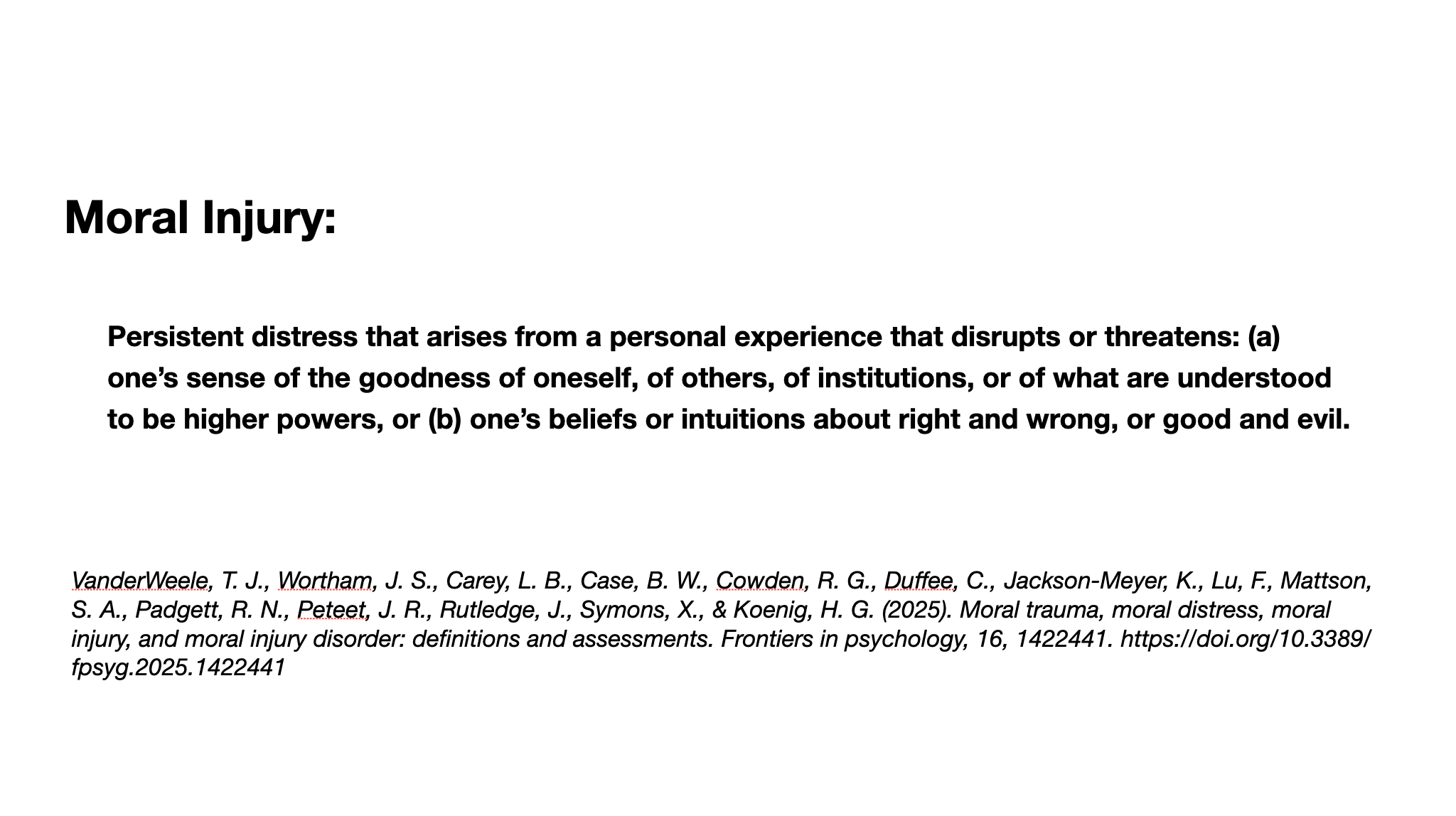
I am going to start by telling you all a little bit about my personal experience in counselor training. Then I will share with you some of the experiences told to me by other counseling students, some of whom are now practicing counselors, some still in school, and some who, like me, were unable to finish their programs.
Then I will explain how the concept of Moral Injury helps to describe what is happening to students training to become counselors and how this hurts them and does a disservice to the clients they will be serving. I will end with an appeal to expand our thinking about the helping professions and the need to develop alternative training pathways to help those called to this work become more effective helpers.
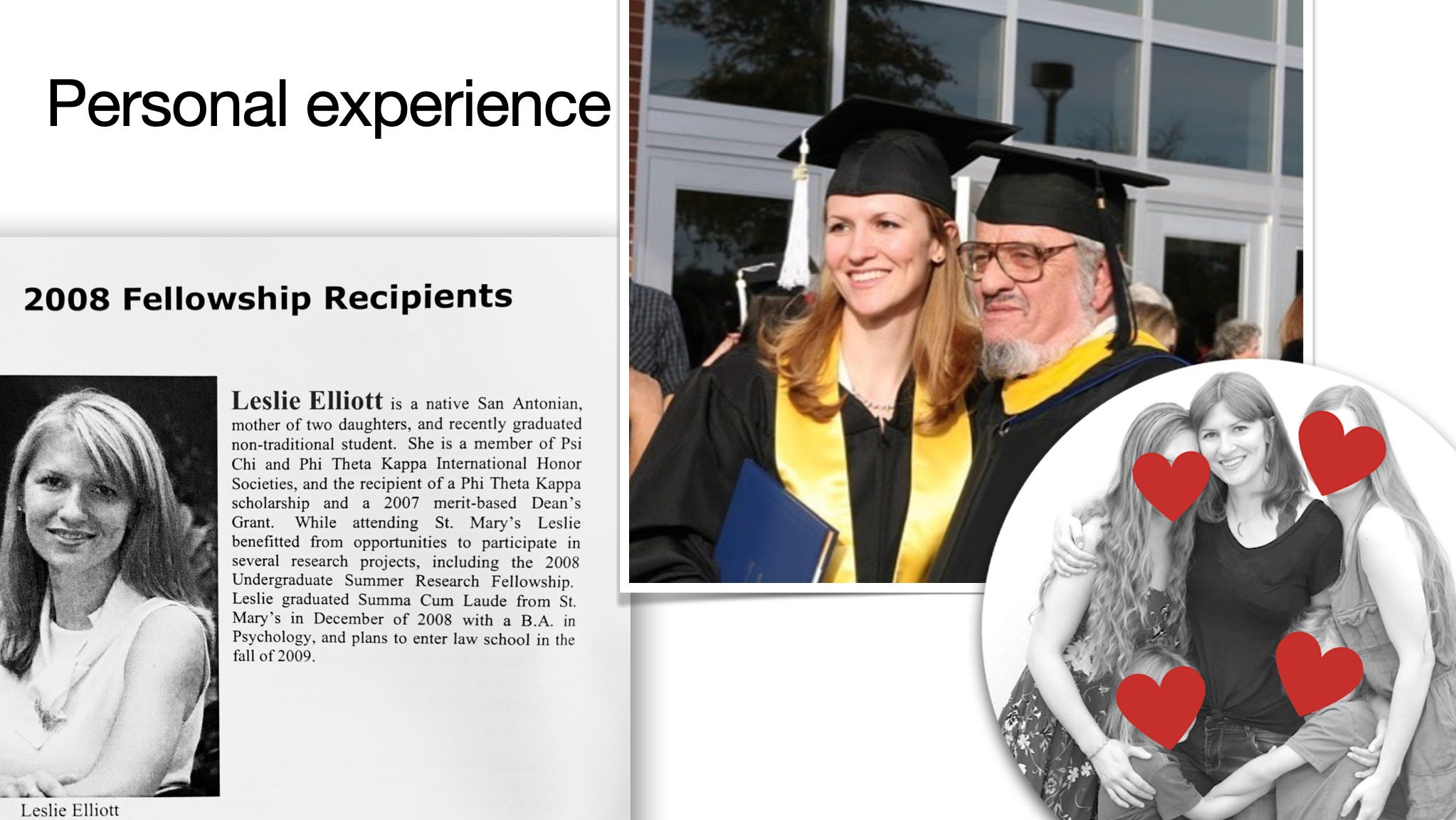
I was forced out of a Clinical Mental Health Counseling Master’s program in the fall of 2022. I entered the program in the spring of 2019, and at the point of my ejection I was only a couple of credits shy of completing my coursework.
The three years I spent in graduate school were hard in a way I did not anticipate going in. I was a stellar undergrad student, graduating Summa Cum Laude as a clinical psychology research fellow with a 99.7 GPA. I went to law school on a presidential scholarship at a school with the number 1 ranked legal writing program in the US. I did well enough, but left in my second year to pursue counseling instead.
I was prepared for academic rigor, but that’s not why my counselor training program was hard.
The choice to leave law school was a difficult one for me, but after almost a year and a half of studying law and surveying the field ahead of me, I had an increasing conviction that I should have pursued counseling instead. One could call it a calling. I knew that the work I wanted to do was close, personal, direct- helping people one-on-one to make their lives better. Despite the strength of my conviction, the transition was not easy, and it took me another 9 years after leaving the study of law to begin my graduate studies.
I didn’t enter graduate school on a whim. During those 9 years I worked, married, moved, nurtured my four children, all the while arranging my life so that I could make another educational foray possible. Just getting there was a goal I pursued for many years, and it was a huge investment for me and my family, as it is for many adults returning to education.
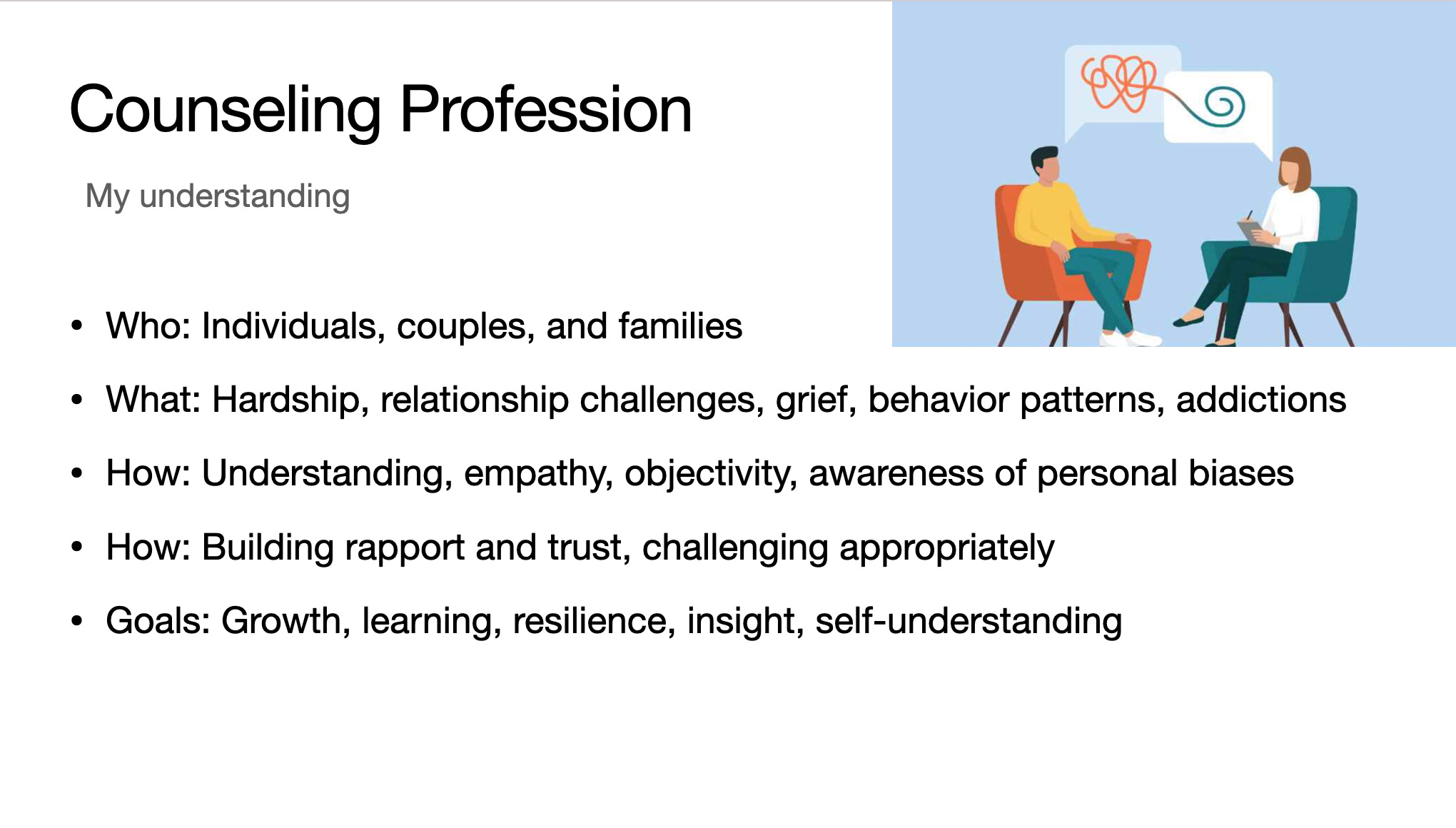
I had an understanding of what the counseling field was before I entered graduate school to become a trained counselor. I had been to counselors on and off since elementary school, and had found some of them helpful, some of them very helpful, and some of them very unhelpful- but I knew what the role was supposed to look like, both from my firsthand experiences and from my previous psychology training and research into programs. What I found in 2019 when I began my studies was something else entirely.
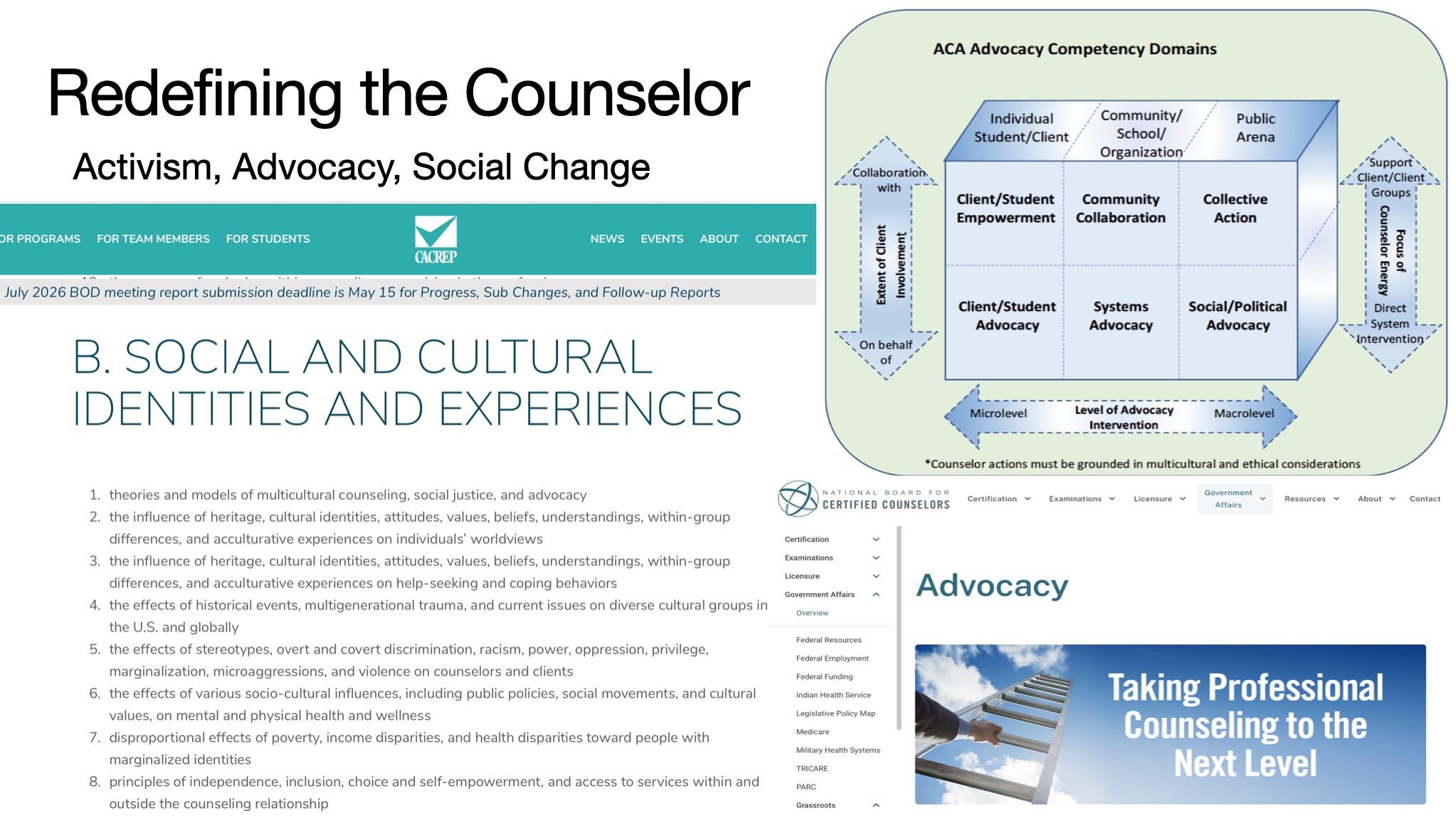
What began as excitement to get back to studying psychological principles and foundations turned to disbelief as doctoral degree holding counseling professors directly instructed counseling students to see clients in terms of race, and encouraged us to ridicule white people.
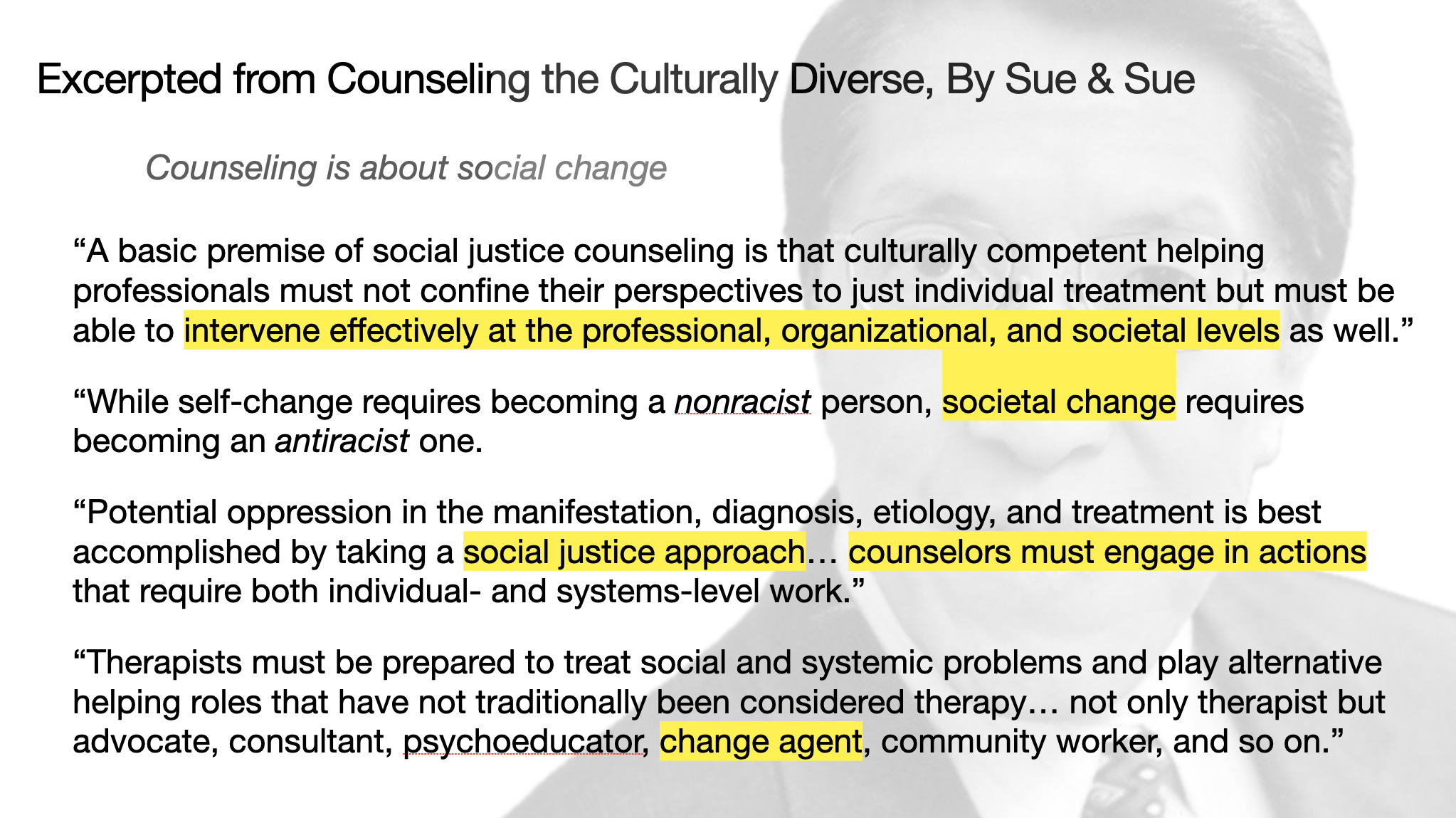
They told us that as counselors, our most important role is to be activists for social change. They told us to use gender-neutral language for everything (parent, partner, sibling…) and that no sexual act or relationship was unhealthy or preferable over any other. They used videos and films to cultivate empathy and pity for people of color and transgender people, and rage toward their white, male, and cisgender oppressors.
When I timidly questioned some of the most self-contradictory teachings I was humiliated in front of my peers and told I was dangerous to my future clients. One of my professors continually reframed my academic questions as personal emotional resistance, and questioned my mental health on my course evaluation, recommending therapy so that I could learn to accept what I was being taught.
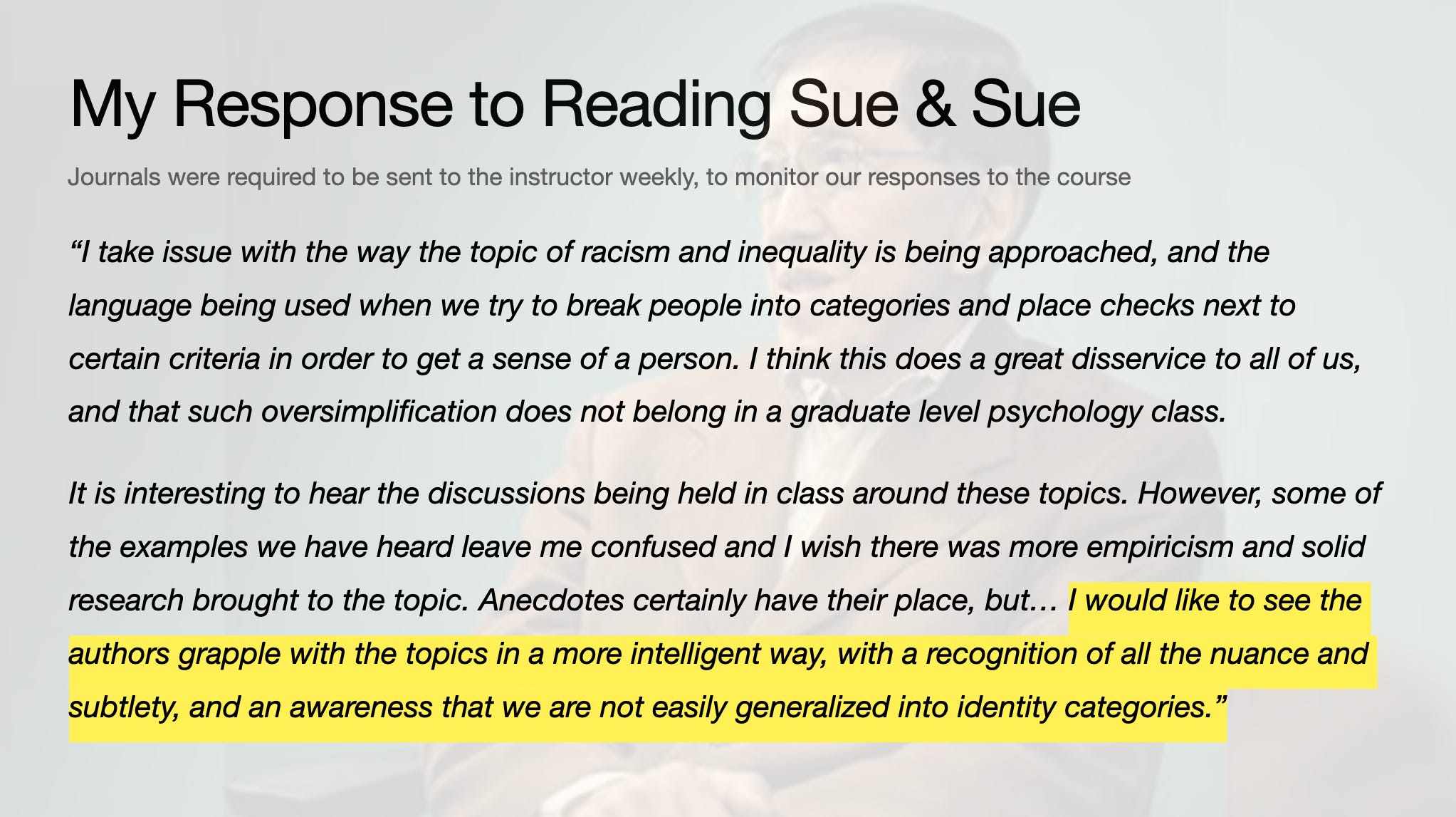
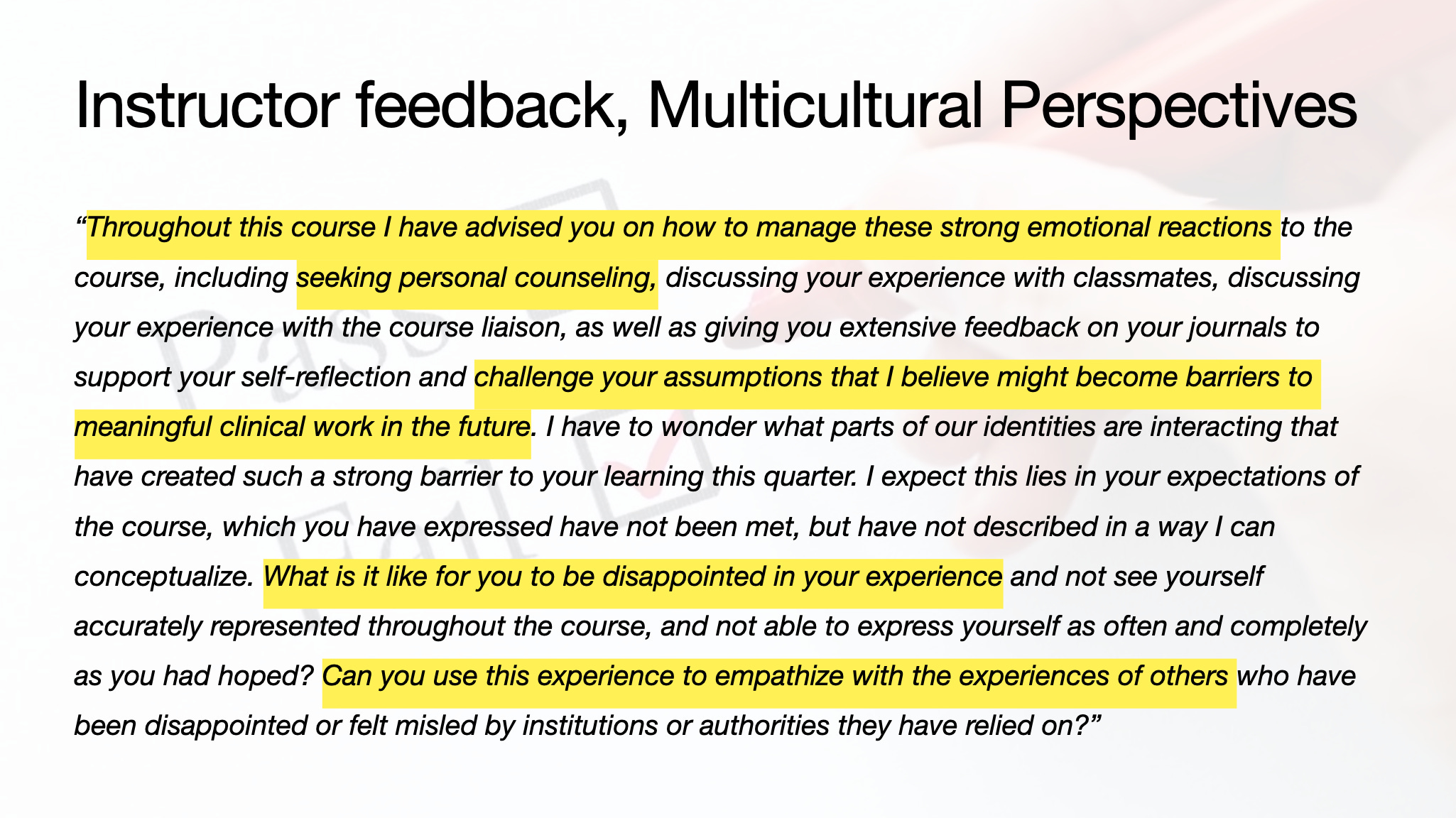
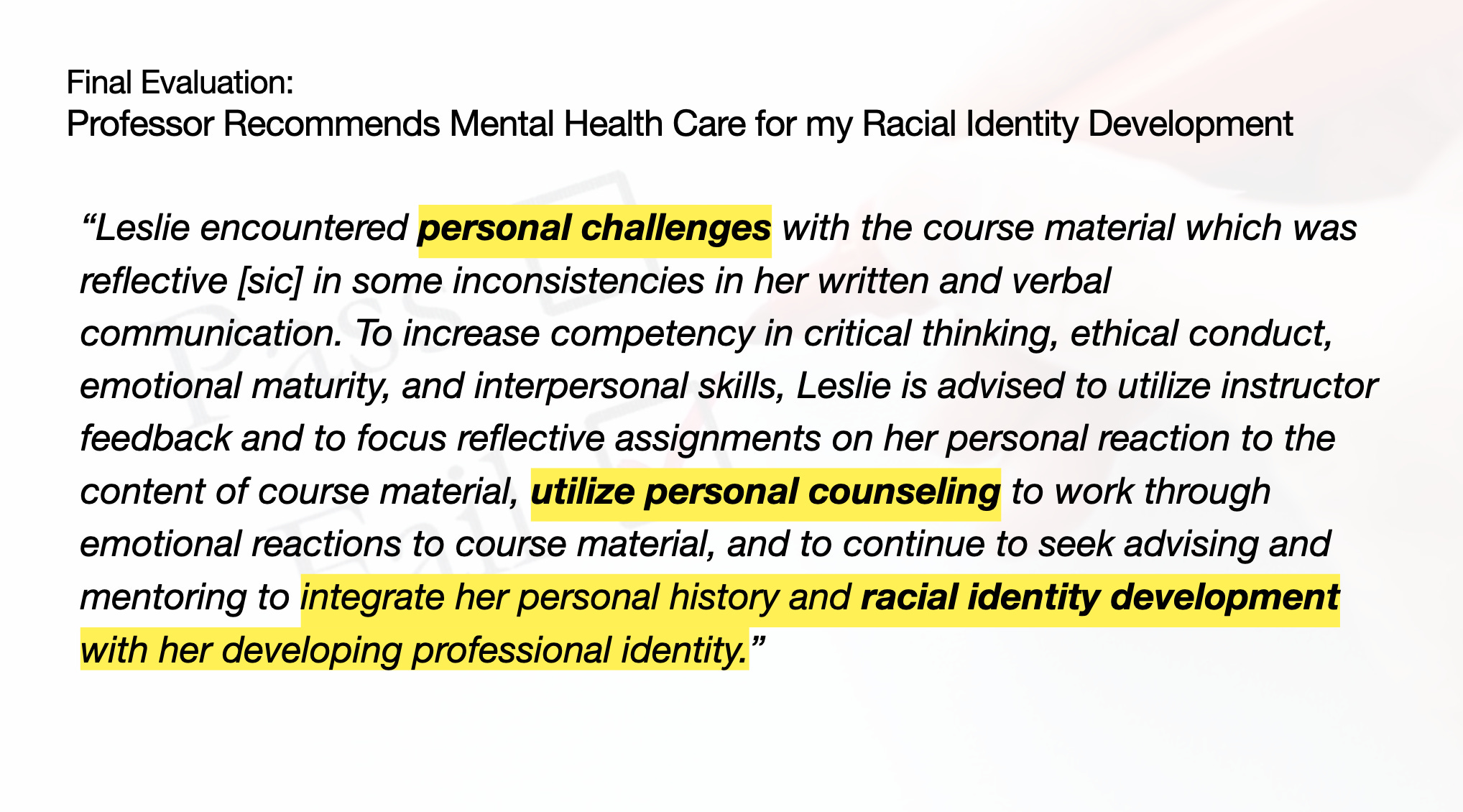
Reading back over the course textbook, it becomes clear that treating all intellectual disagreement as emotional overreaction is a standard defense.
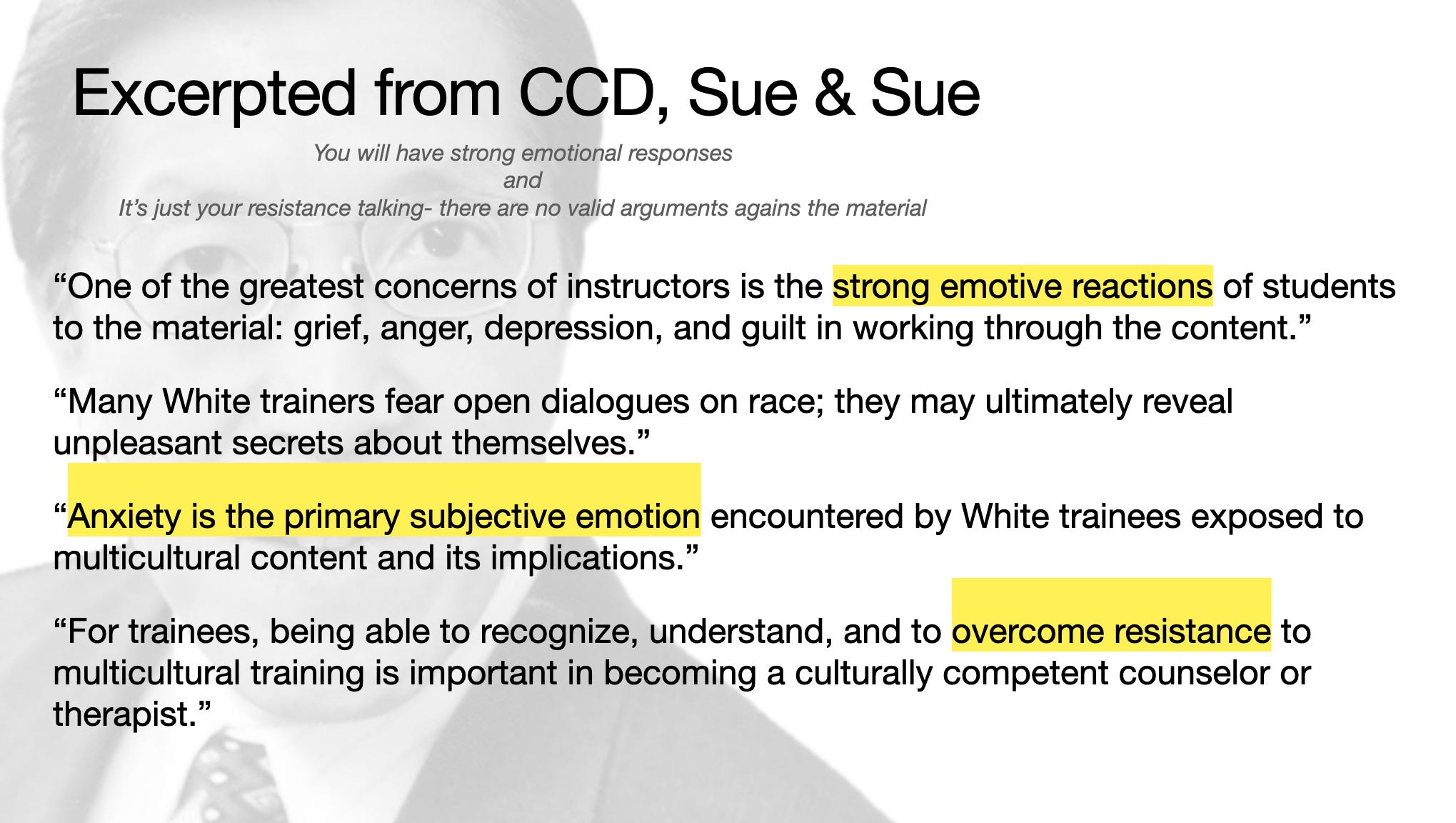
I faltered. I had worked so hard to get here, but what was this? We were being trained to be angry, resentful, radicalized activists. Our class message boards were frothing with judgement and I heard my fellow students repeating in lockstep strange new talking points about “privilege,” “cis-het,” “internalized white supremacy.”
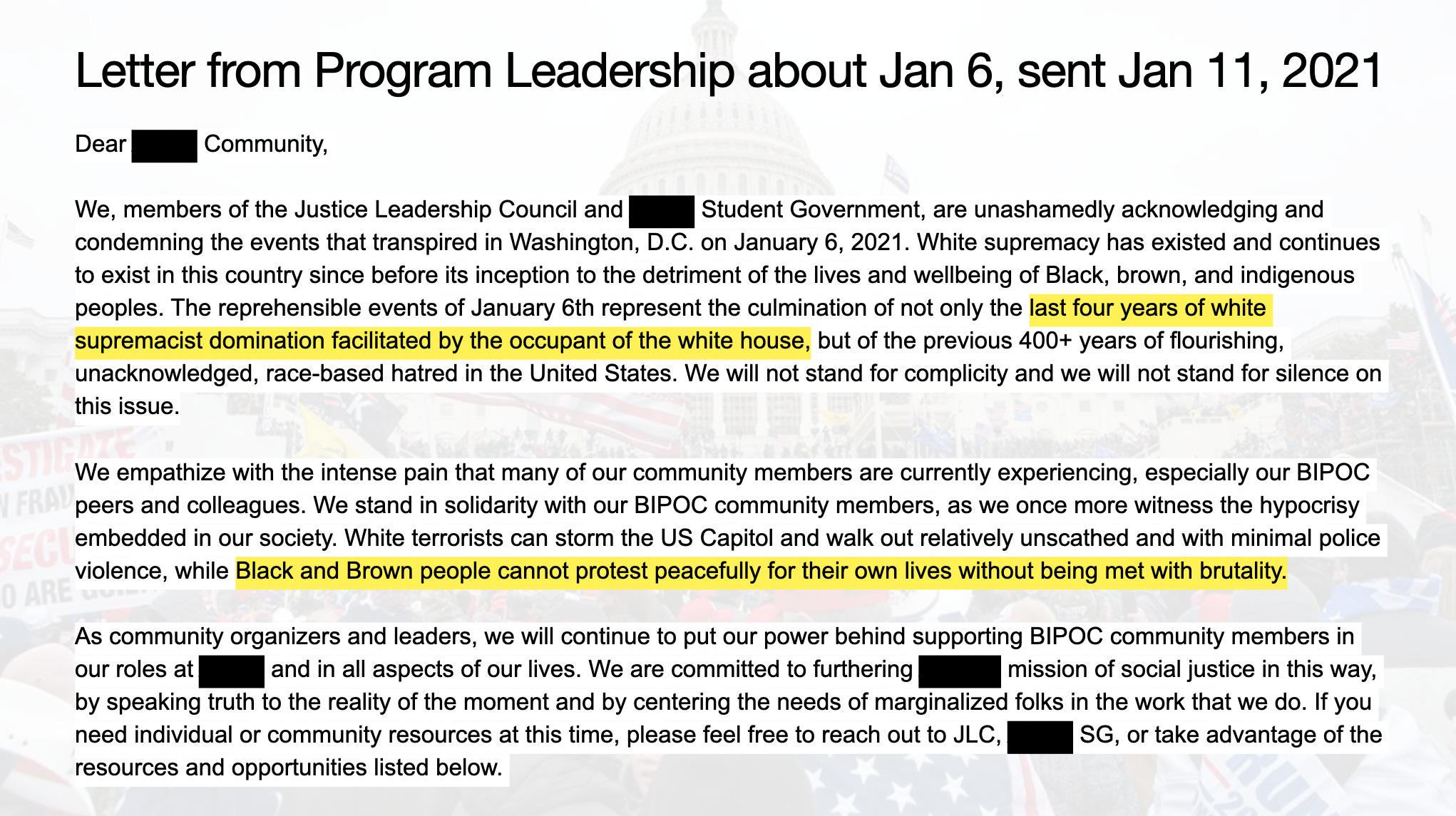
My program also pushed political messages in a way I’d never seen before in my years in higher education. Students and teachers openly talked about “Trump supporters” as if they were the lowest of the low. As counselors we could cultivate empathy for violent domestic abusers and pedophiles, but not for conservatives. There was no discussion about the nuances of party politics and seemingly no care given for the fact, even if you couldn’t stand this candidate, that the 50% of the country that votes for republican candidates would have voted for their party’s candidate regardless of character assessment, or that populist sentiments rising in response to economic and political problems might have caused Trump’s messaging to appeal to independent voters. None of this- just a dripping disdain for “Trump supporters.”
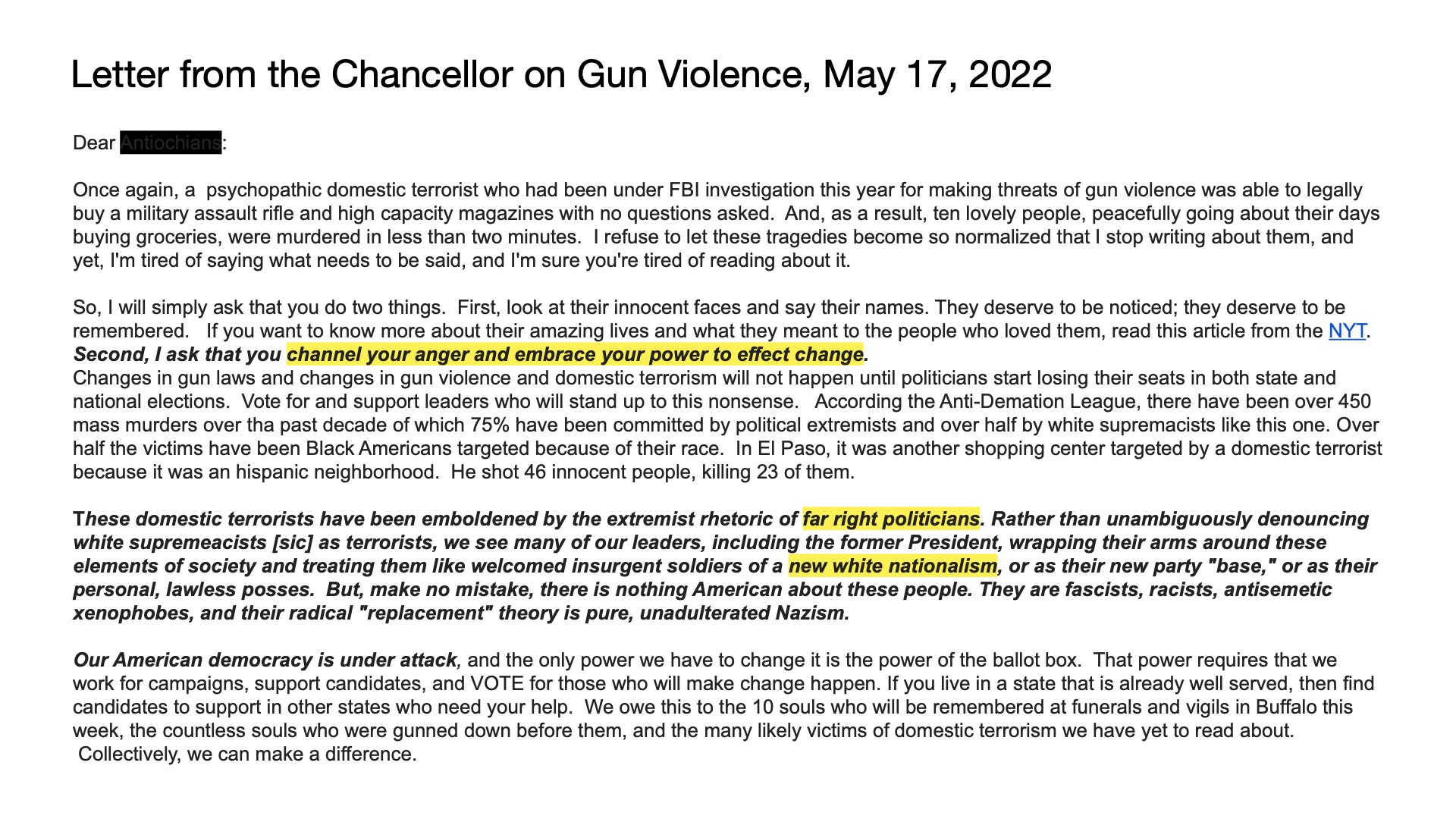
I had not voted for Trump in 2016, in fact, when I entered graduate school I’d never voted for a republican candidate and considered myself a staunch democrat. But my mother typically voted republican, I had good friends who did, too, and they all voted for him. These were real people with complex lives and inner worlds, no different from myself or others who voted democrat and no less deserving of care. Yet, in my counseling program no care was cultivated for them and no attempt was made to humanize them- quite the contrary.
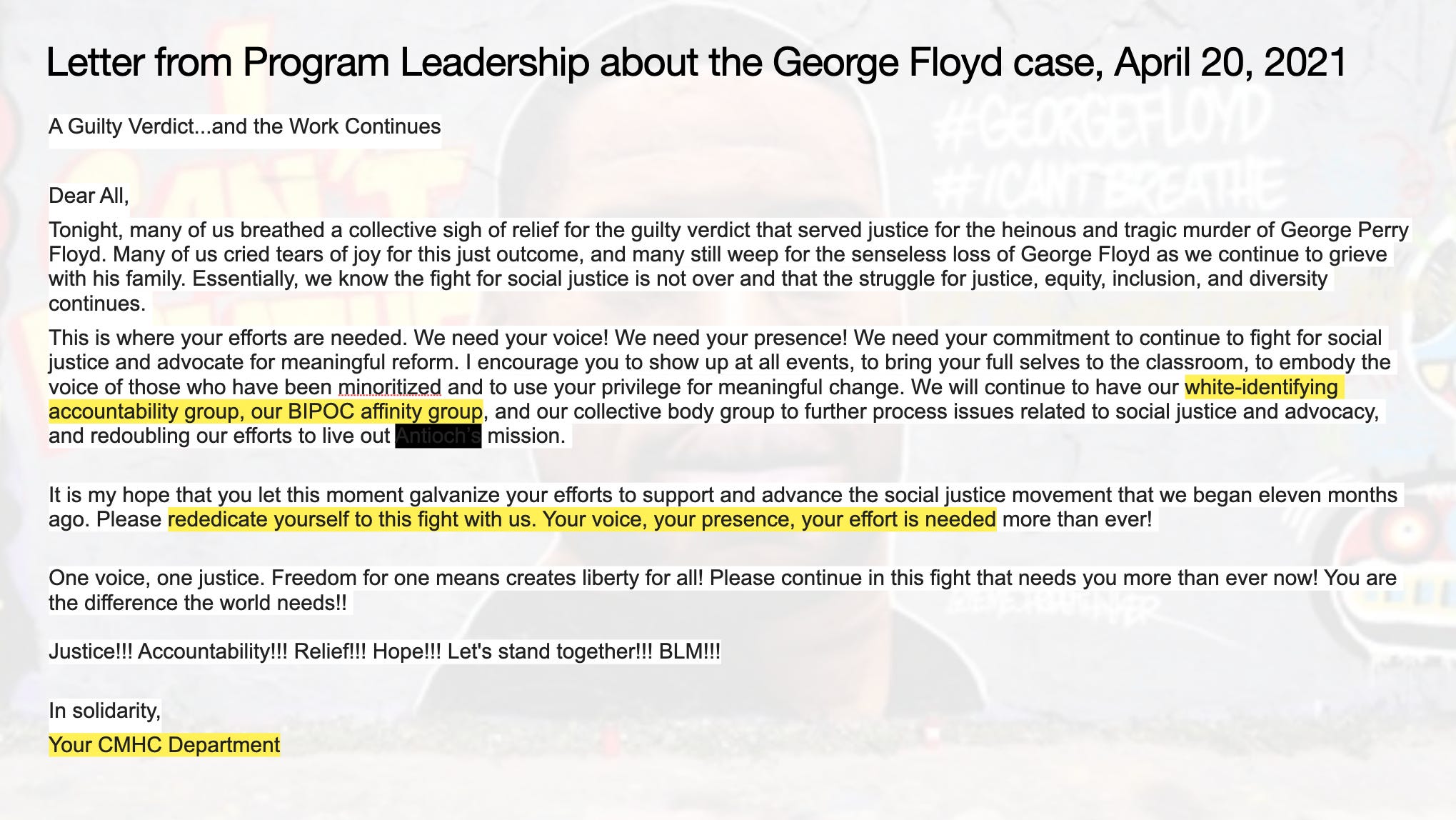
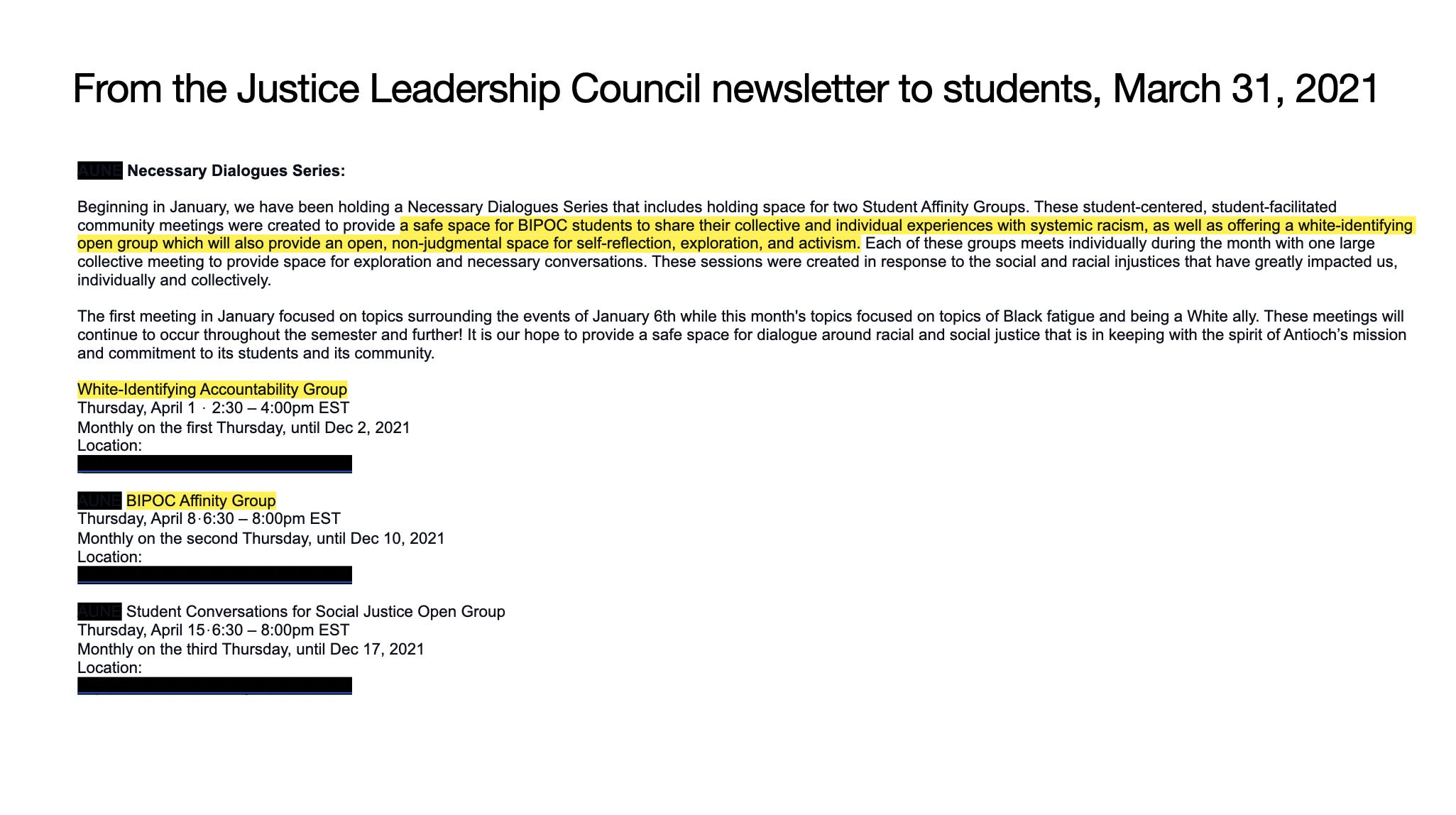
We were encouraged to attend racially segregated Justice groups: a BIPOC affinity group and a White accountability group.
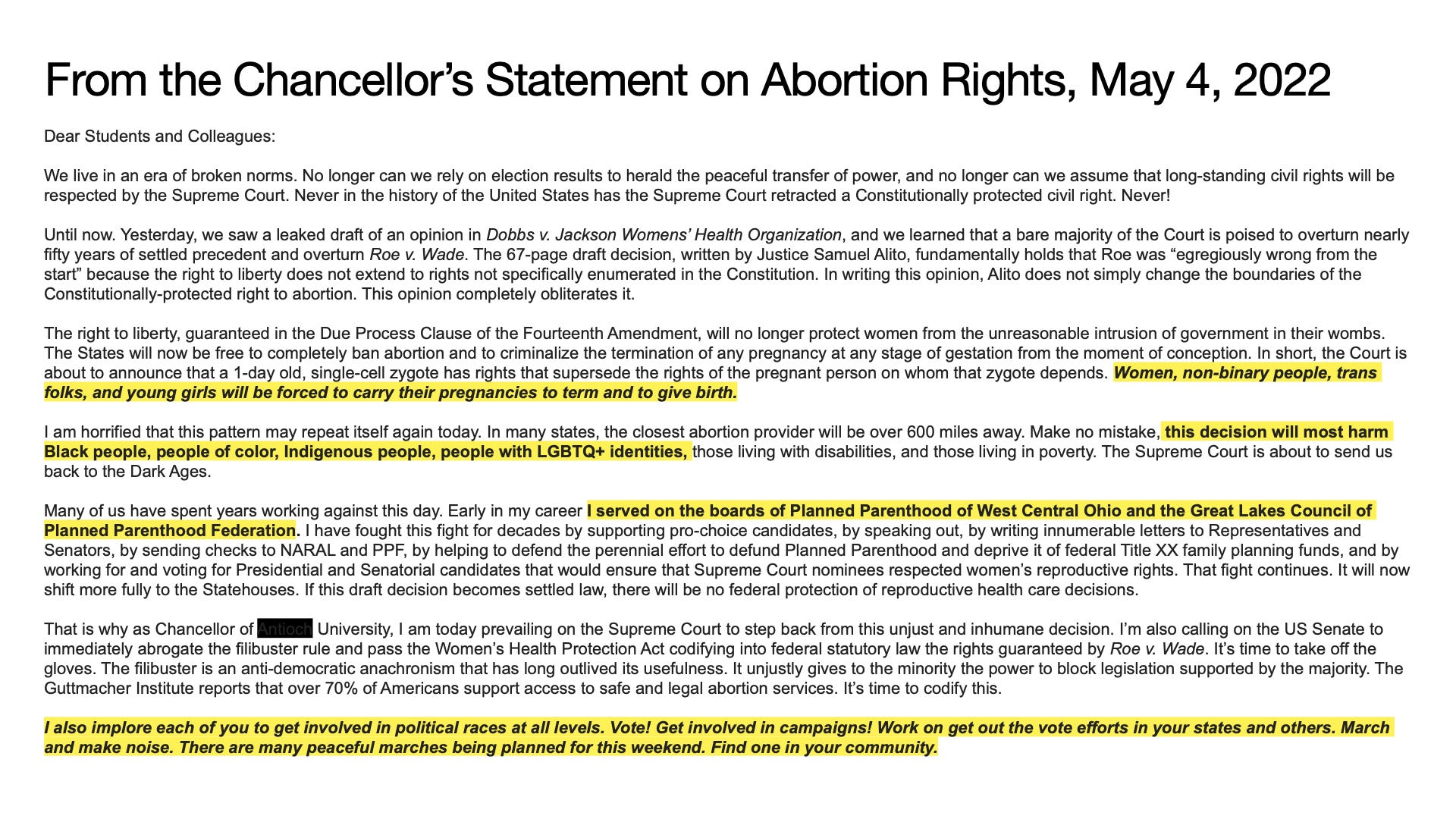
Students were also invited to workshops promoting gender affirmation, decolonialism, anti-whiteness, and we also received frequent missives from the program’s leadership about political topics ranging from Transgender rights (de-gender everything, protect black trans- women from “transmisogynoir”), to Black Lives Matter and defunding the police, to abortion rights, to anti- colonialist demands to abolish Columbus Day as a holiday. All of these and more were written from a single point of view, condemning of viewpoint diversity.
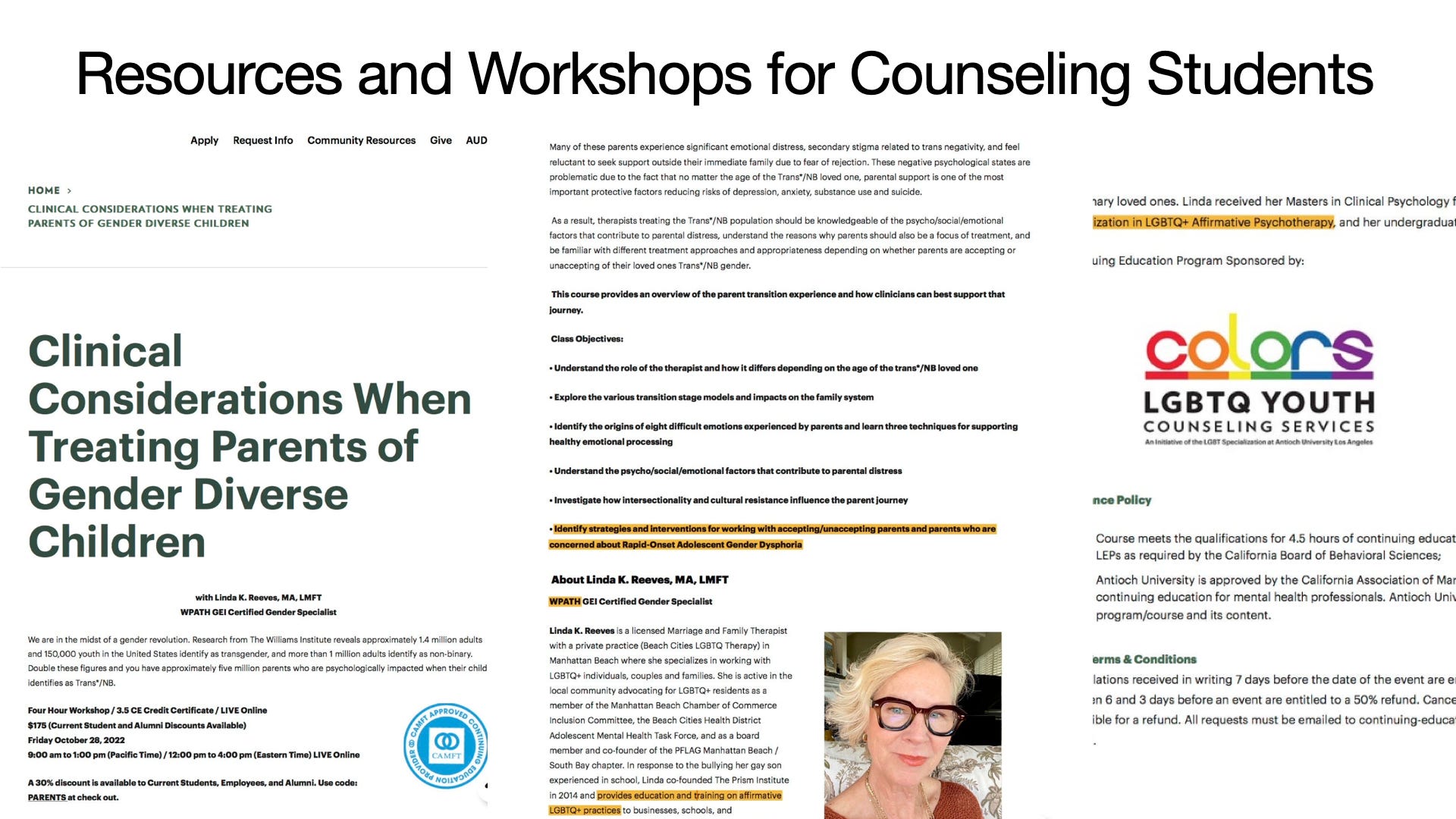
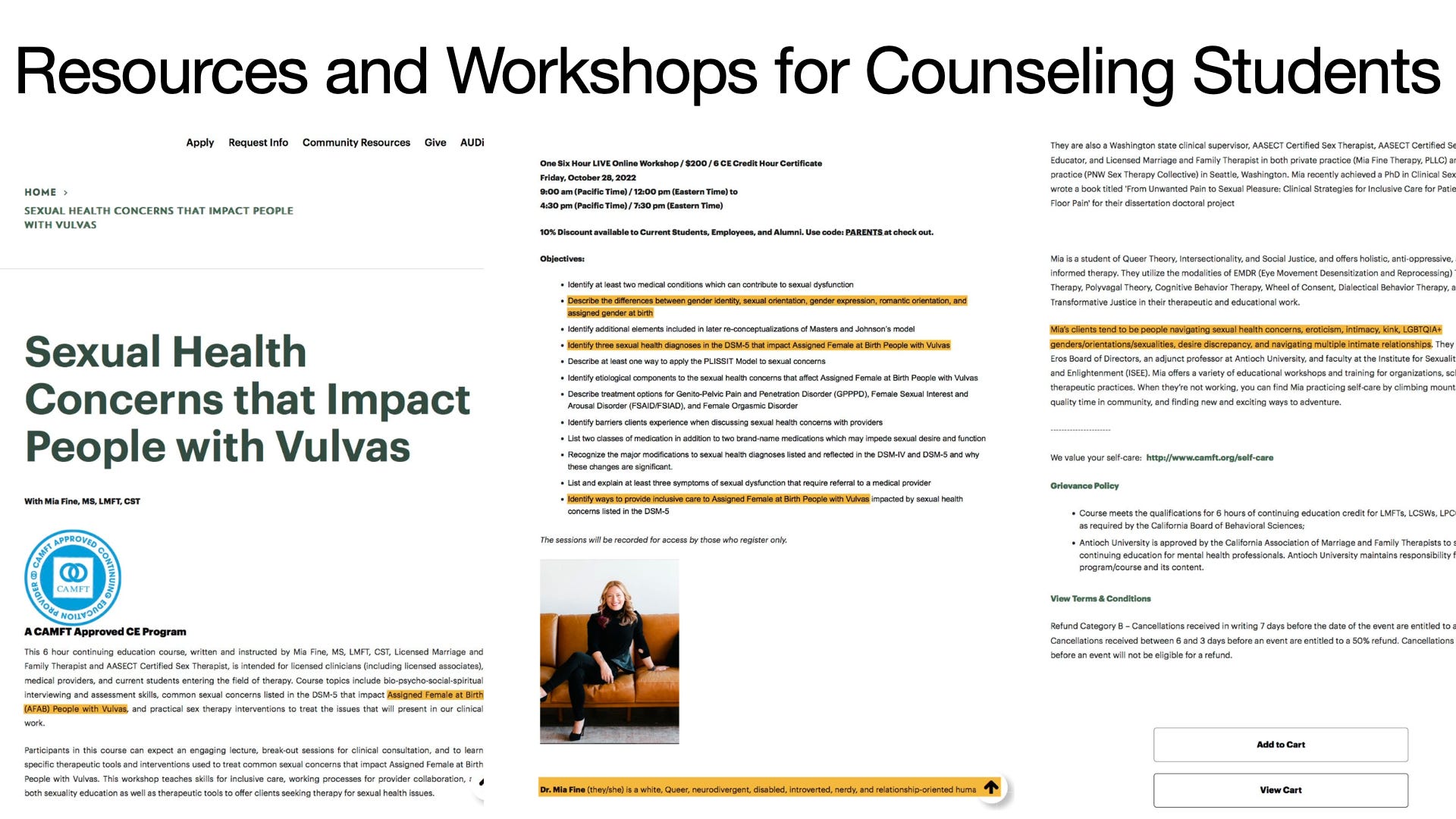
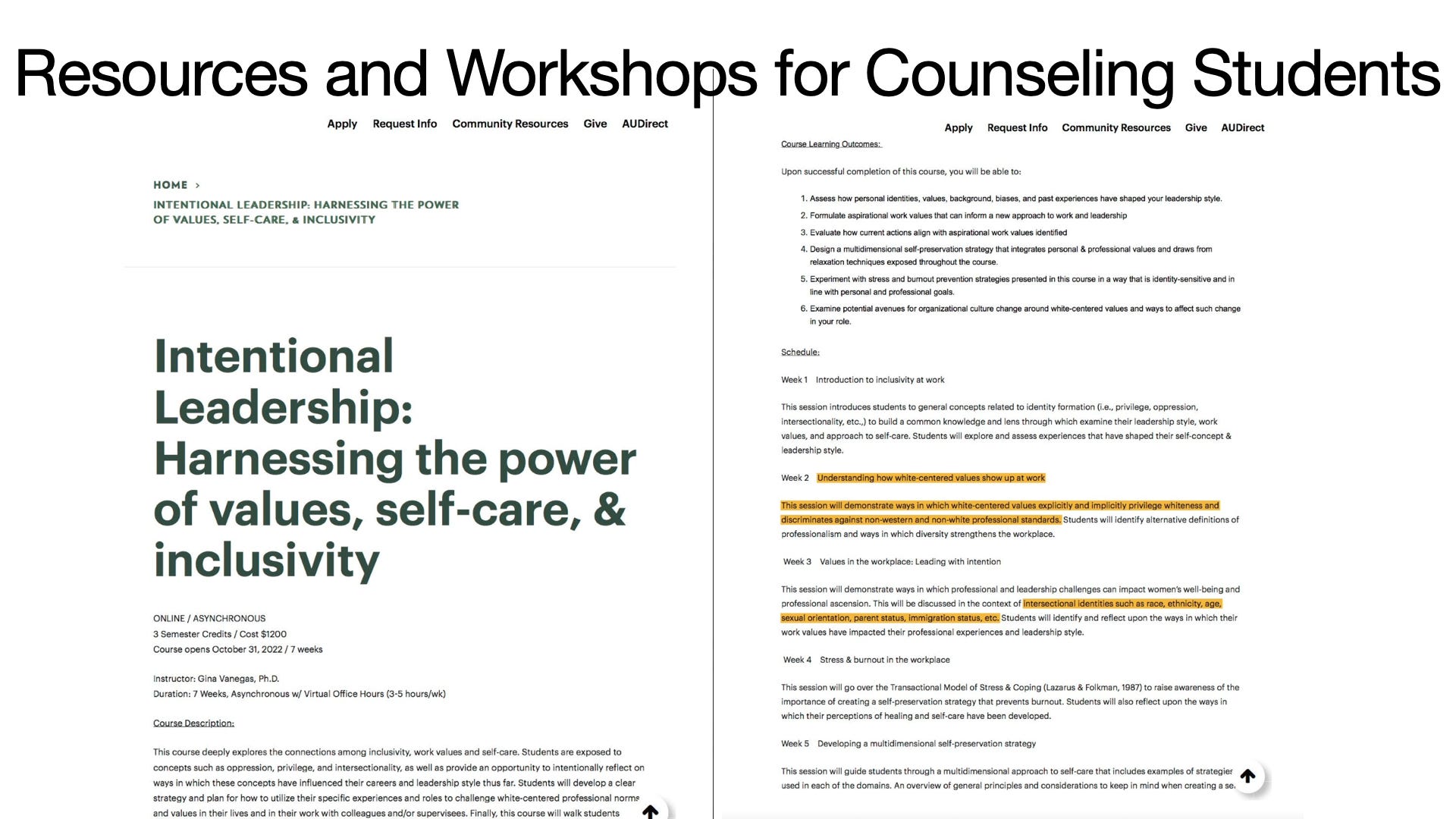
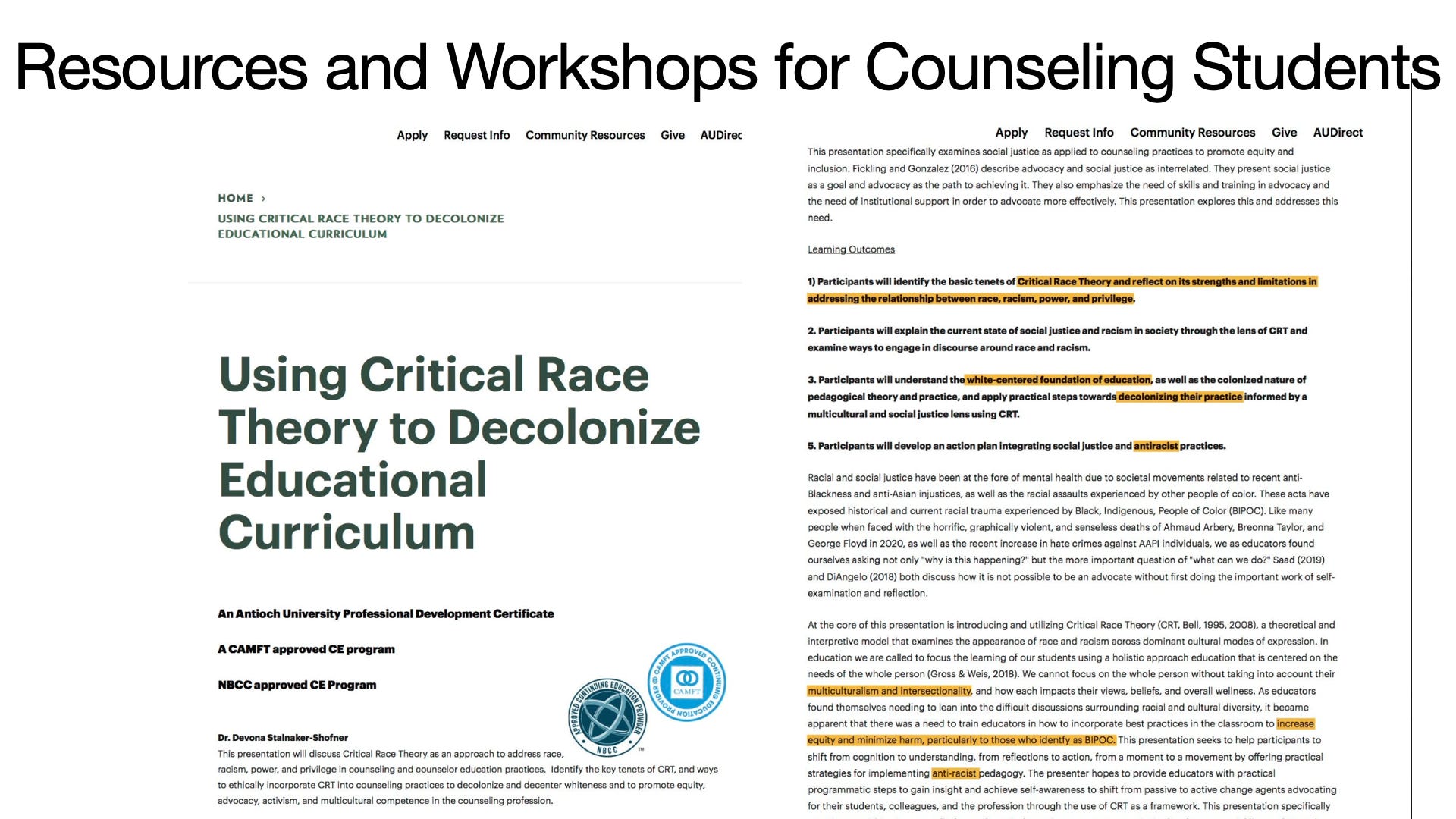
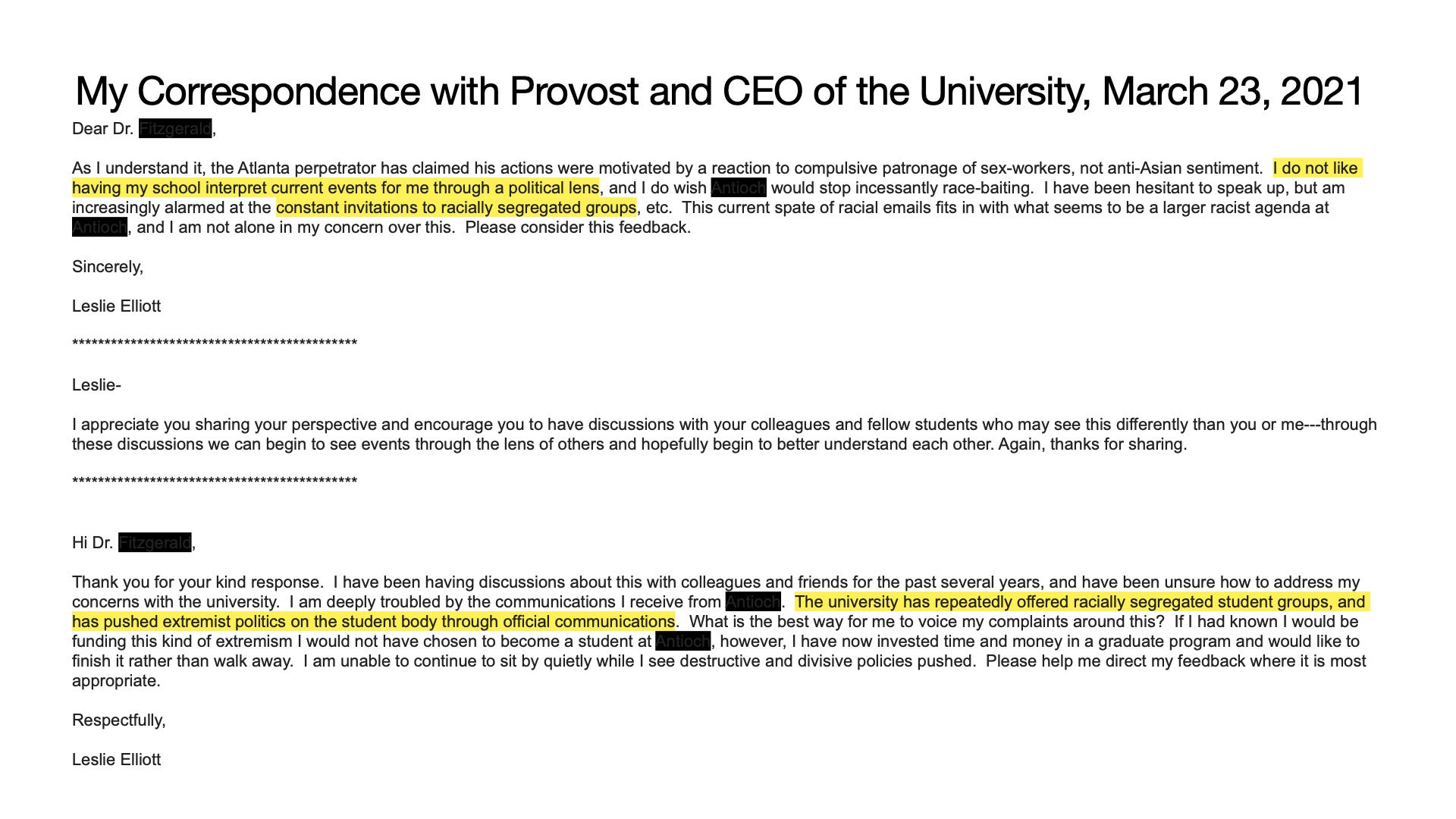
I worked my way through my required courses, deeply disillusioned. I wrote carefully worded essays designed to regurgitate their diversity language without fully betraying myself. As time passed the intensity of the school’s “social justice” focus seemed to increase, and I began responding to the letters I received from the chancellor and provost, hoping that if they received reasonable feedback from students they might moderate their statements. Every quarter when it came time to register for new classes I hesitated, uncertain about continuing. But I made it through, until one of my last courses forced the issue in a new way.
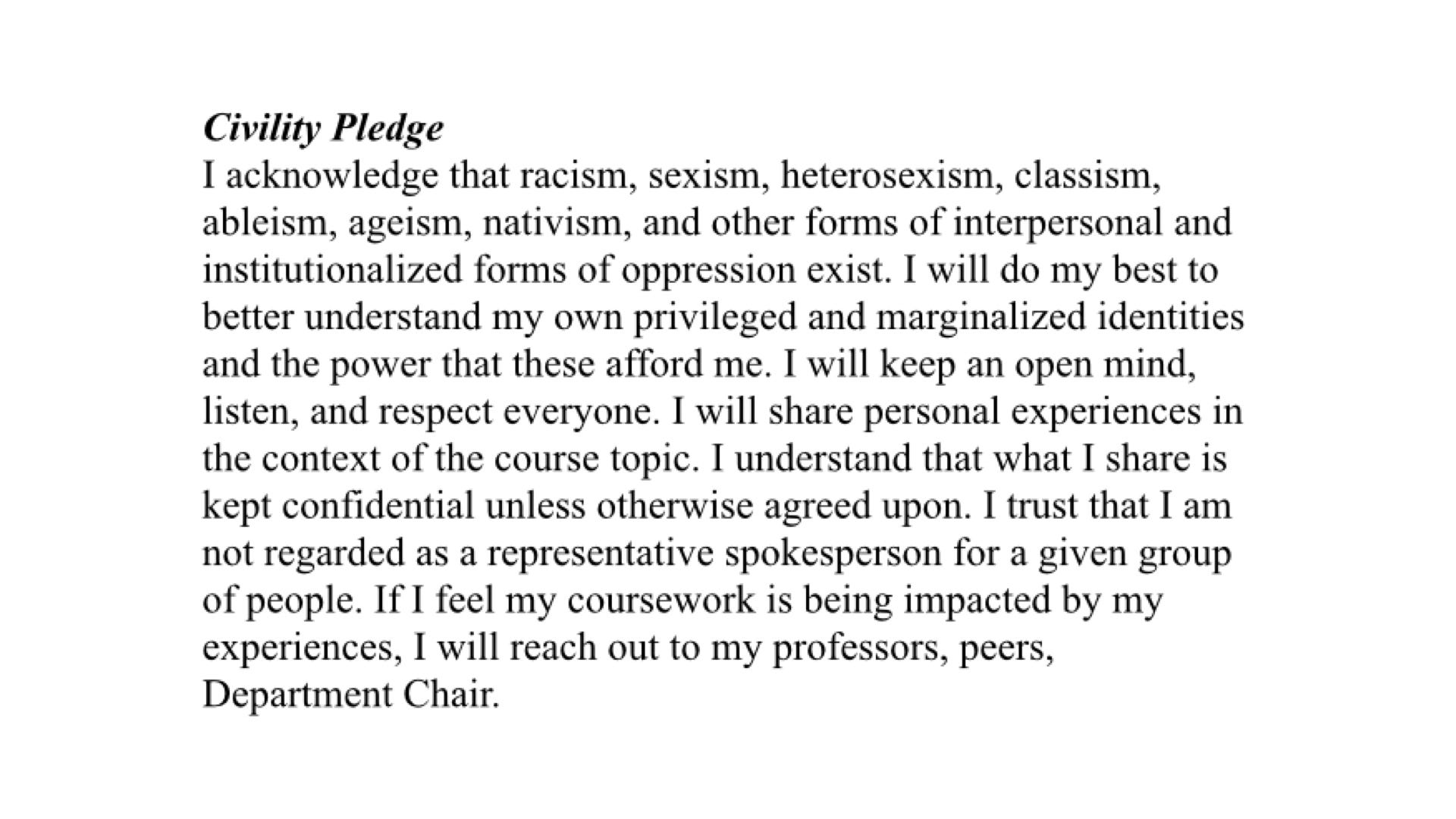
The assignment: write a statement saying that you agree with the civility pledge, and post it to the class forum. I read the pledge over and over and still disagreed with it. This time there was no massaging the language- in order to take this class I must take a pledge, an oath, to a framework that violated my values.
I contacted my advisor and she laughed, telling me to get it over with because the ideology was just going to increase, and that the school was fully aware and proud that they were making therapy overtly political. She also told me that faculty were “aware that we are no longer training counselors who can work with ‘the Trump supporter.’”
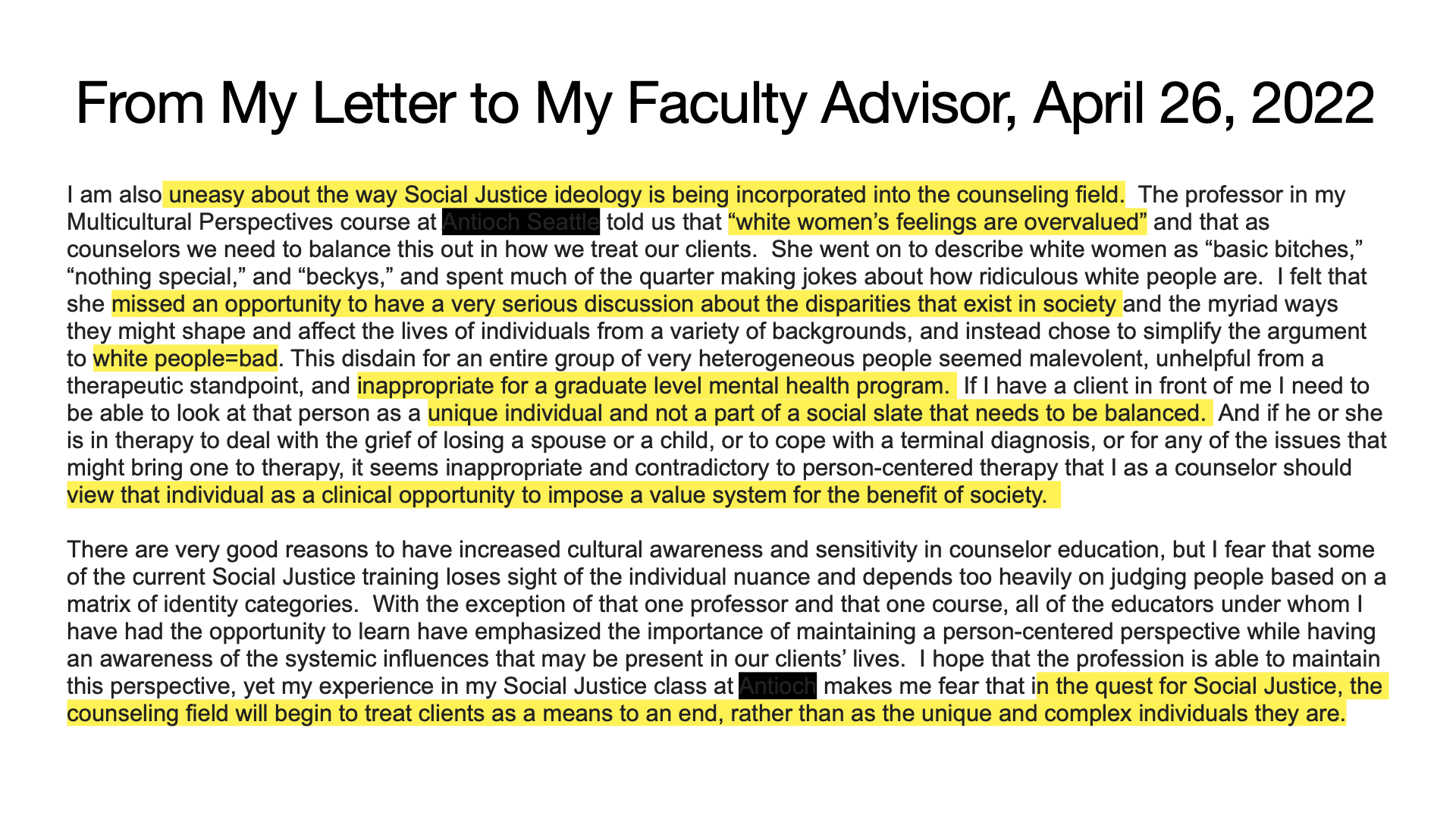
I dropped the class and took to the internet to share my concerns about what I was seeing. In response, the university set up a crisis team, and I was subsequently forced out of the program amid accusations by university leadership of white supremacy and transphobia. Since that time, in late 2022, I have interviewed and spoken with over 200 counselors, counseling students, and educators from the US and around the world, many of whom have shared stories similar to my own. We went into this field hoping to learn about human behavior and how we could hone our skills at helping others who need support for their deeply personal processes, and instead we were taught to be resentful, guilty, and suspicious of others. We learned to distrust academic and institutional authority. We learned to distrust our own intuitions and question our own judgements about our foundational understandings. We learned that open exploration of complex social dynamics in the counseling field will be punished with shame, humiliation, and ostracism. We learned to walk a fine line between lying and challenging orthodoxy. We learned how to stay silent for fear of reprisal.
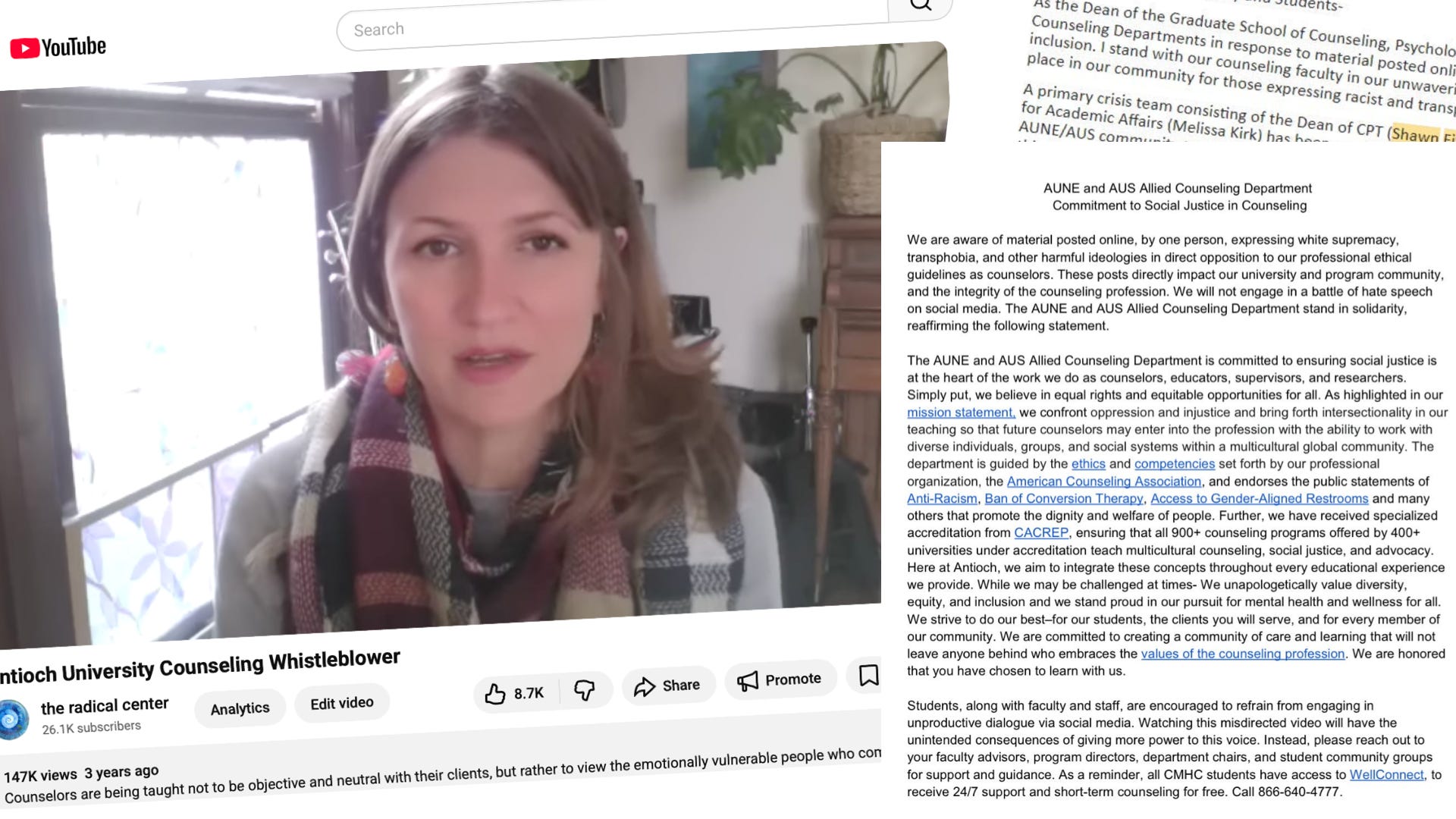
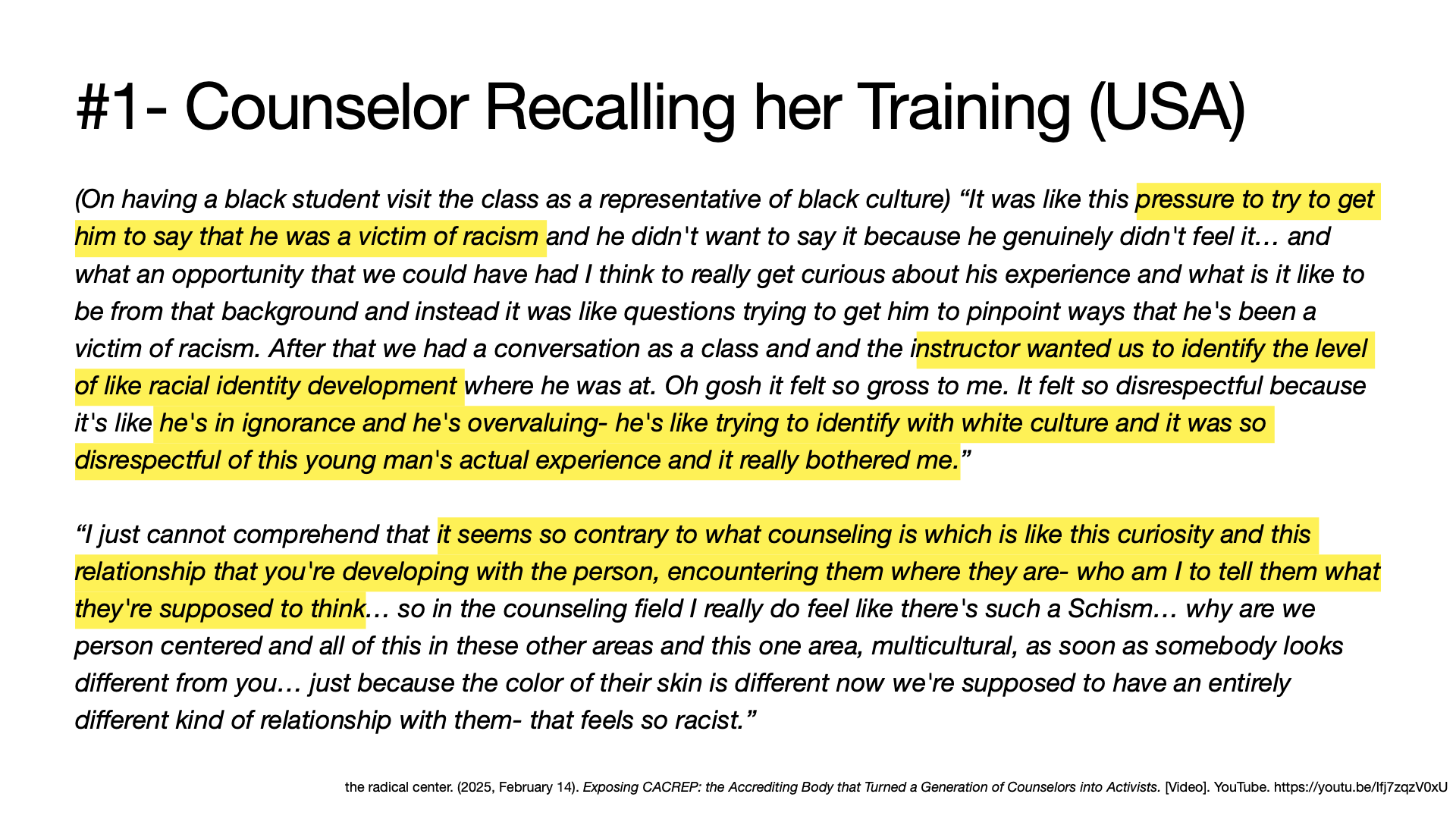
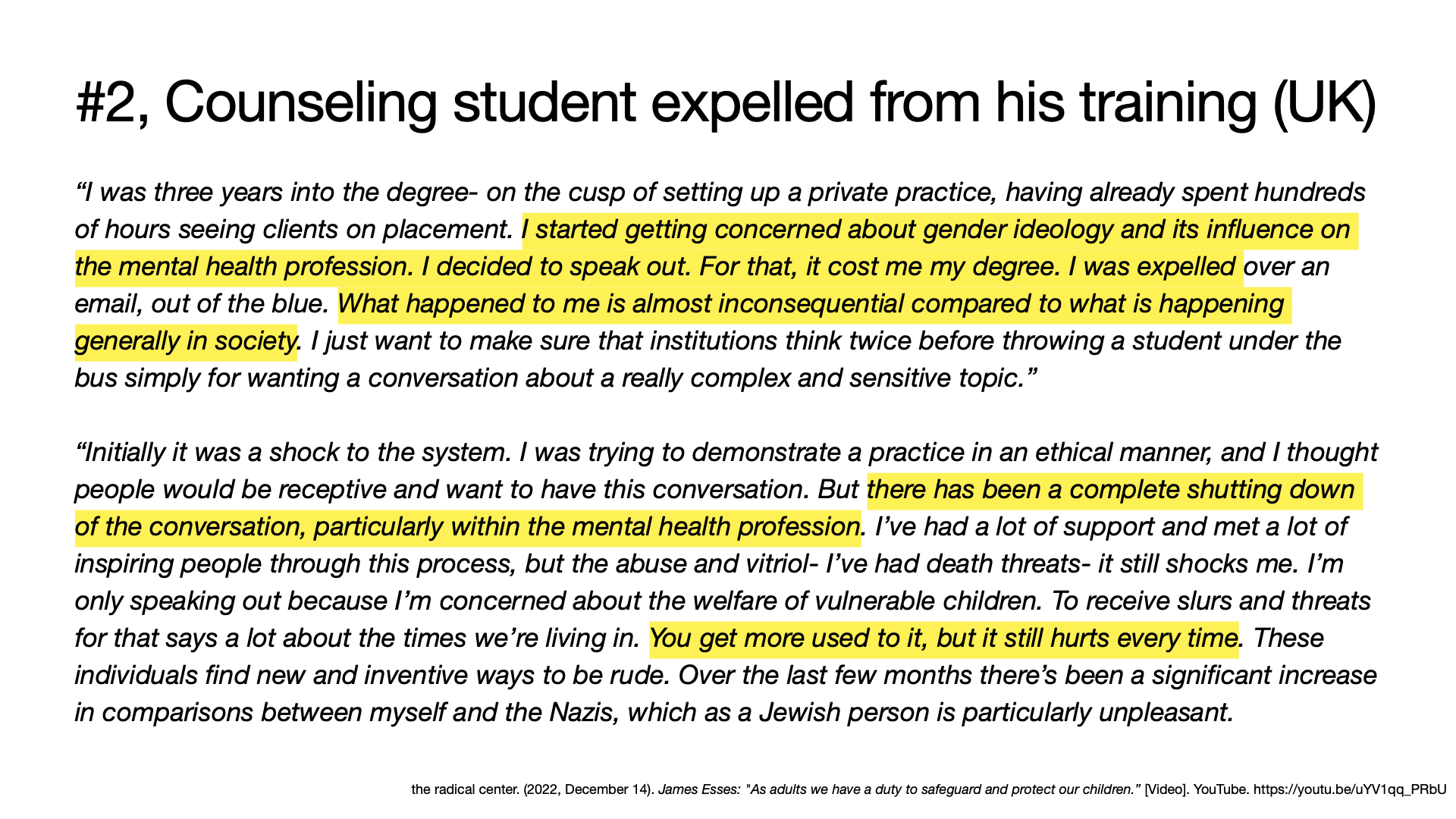
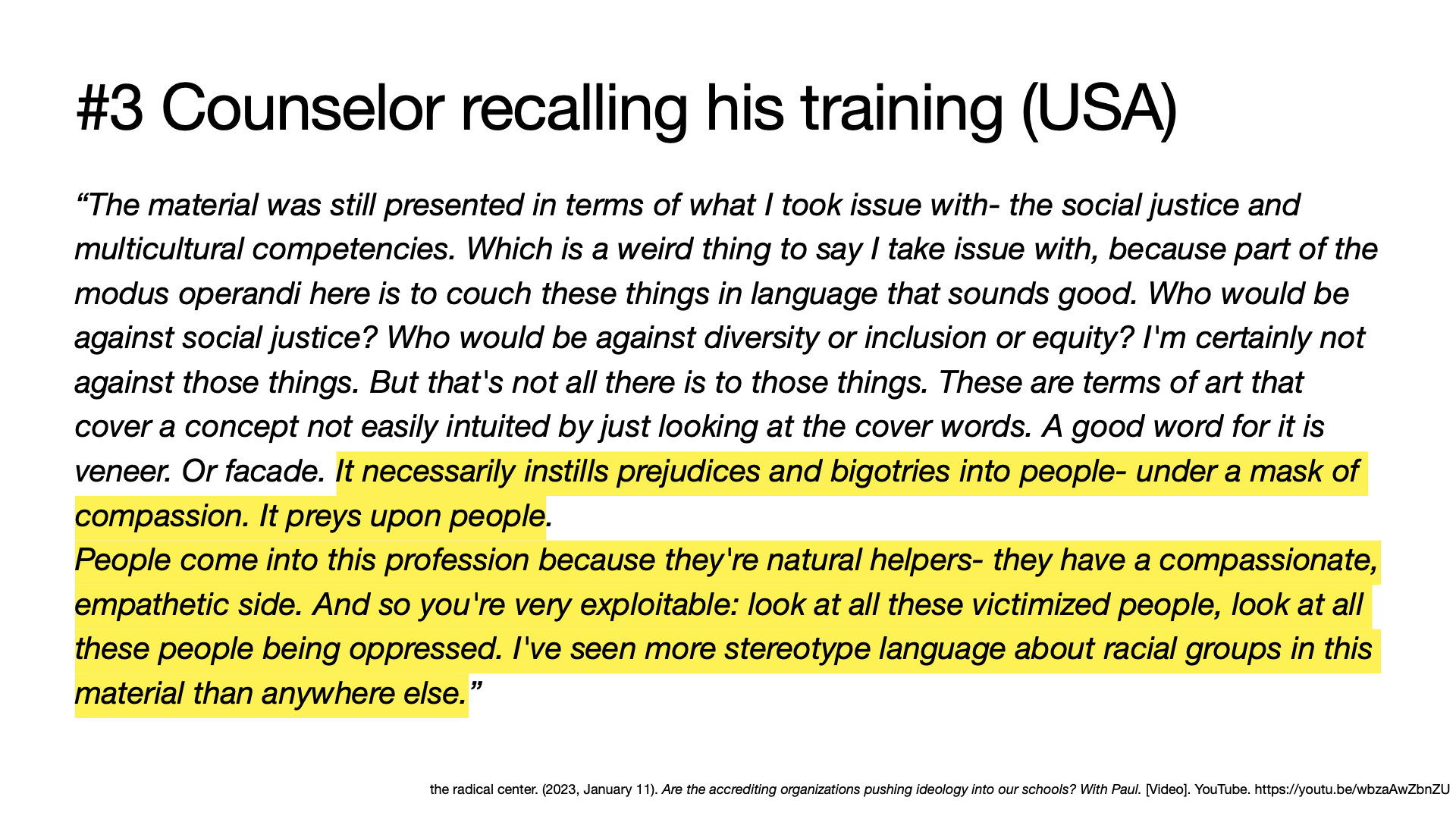
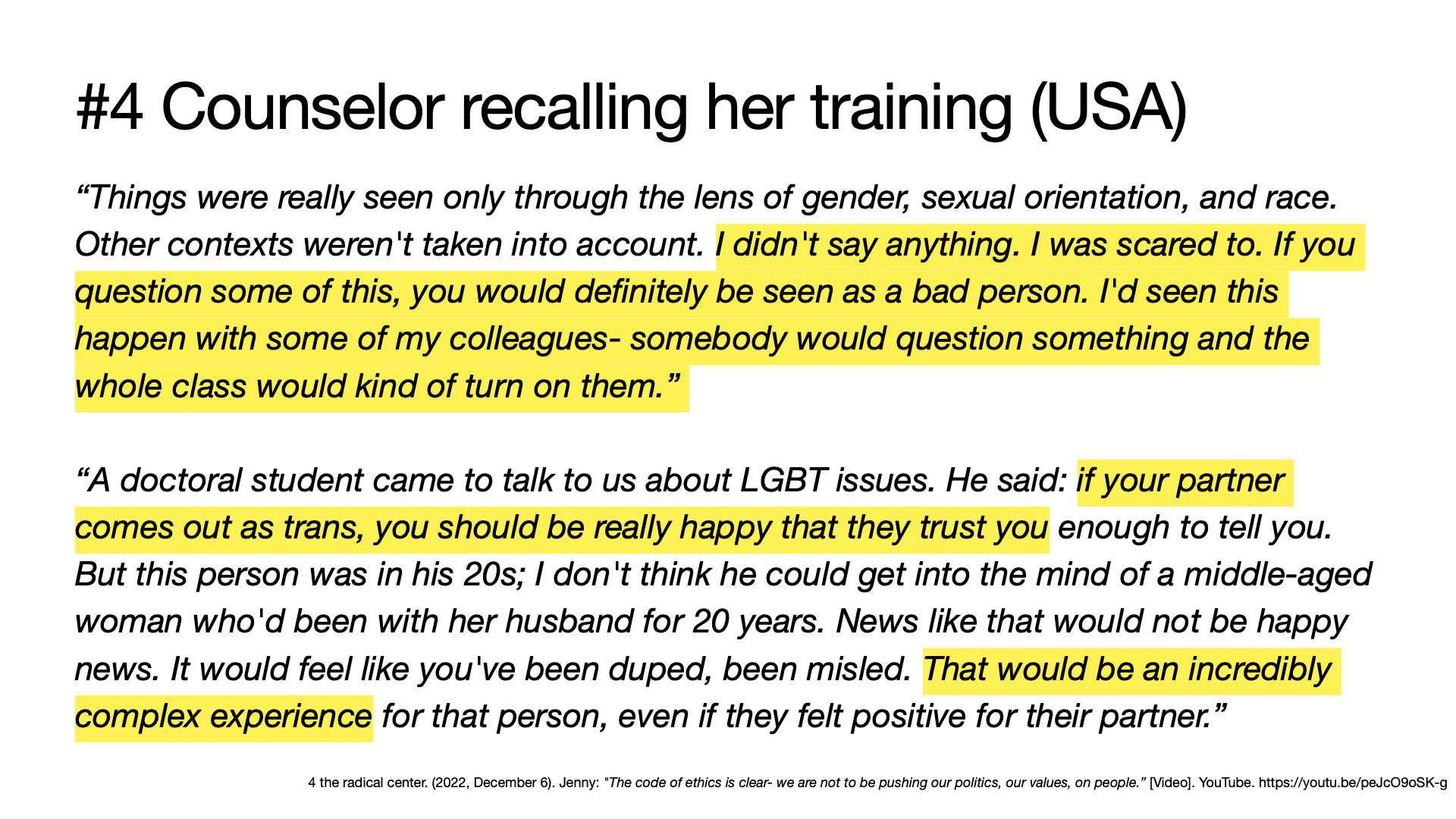
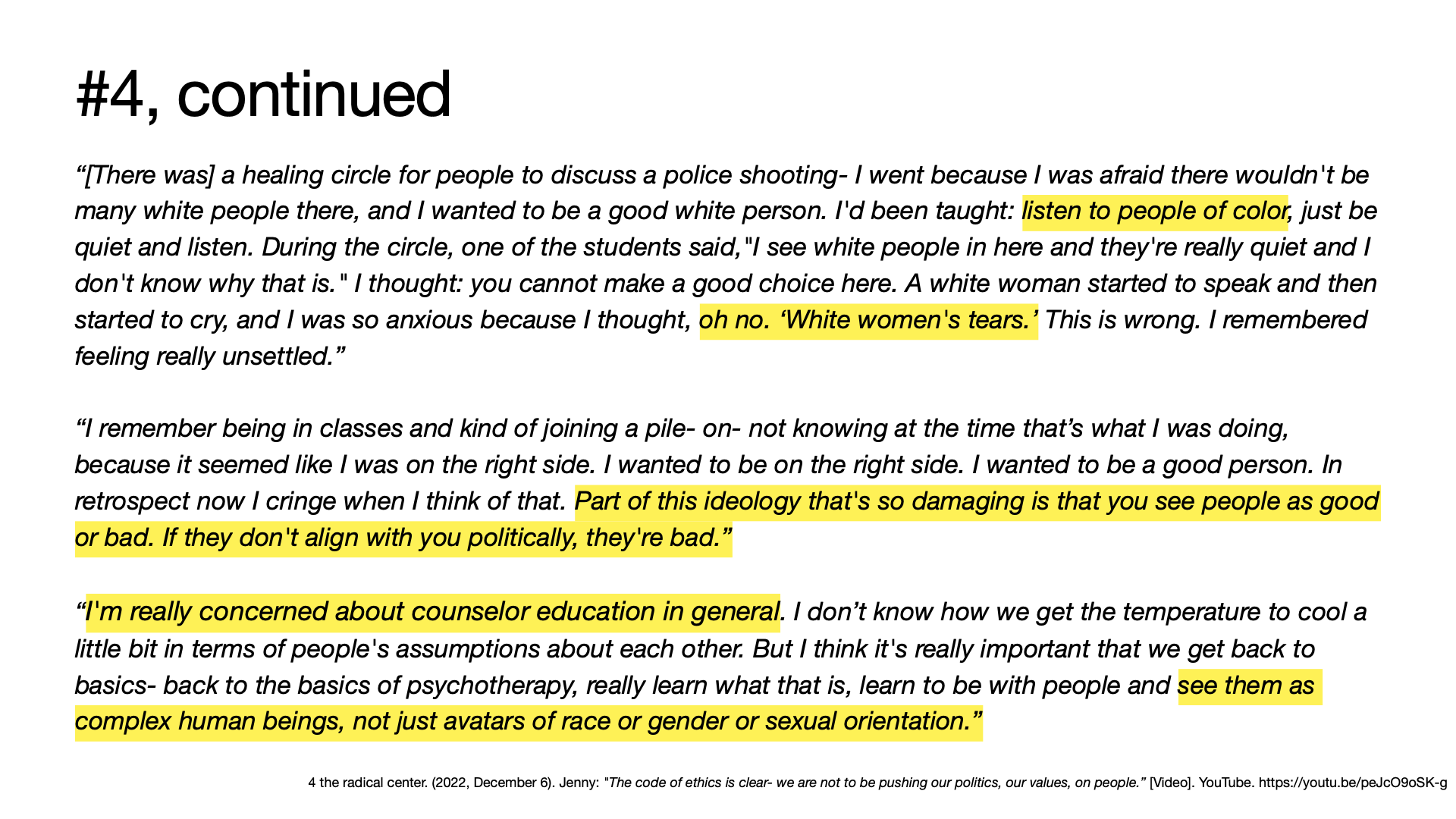
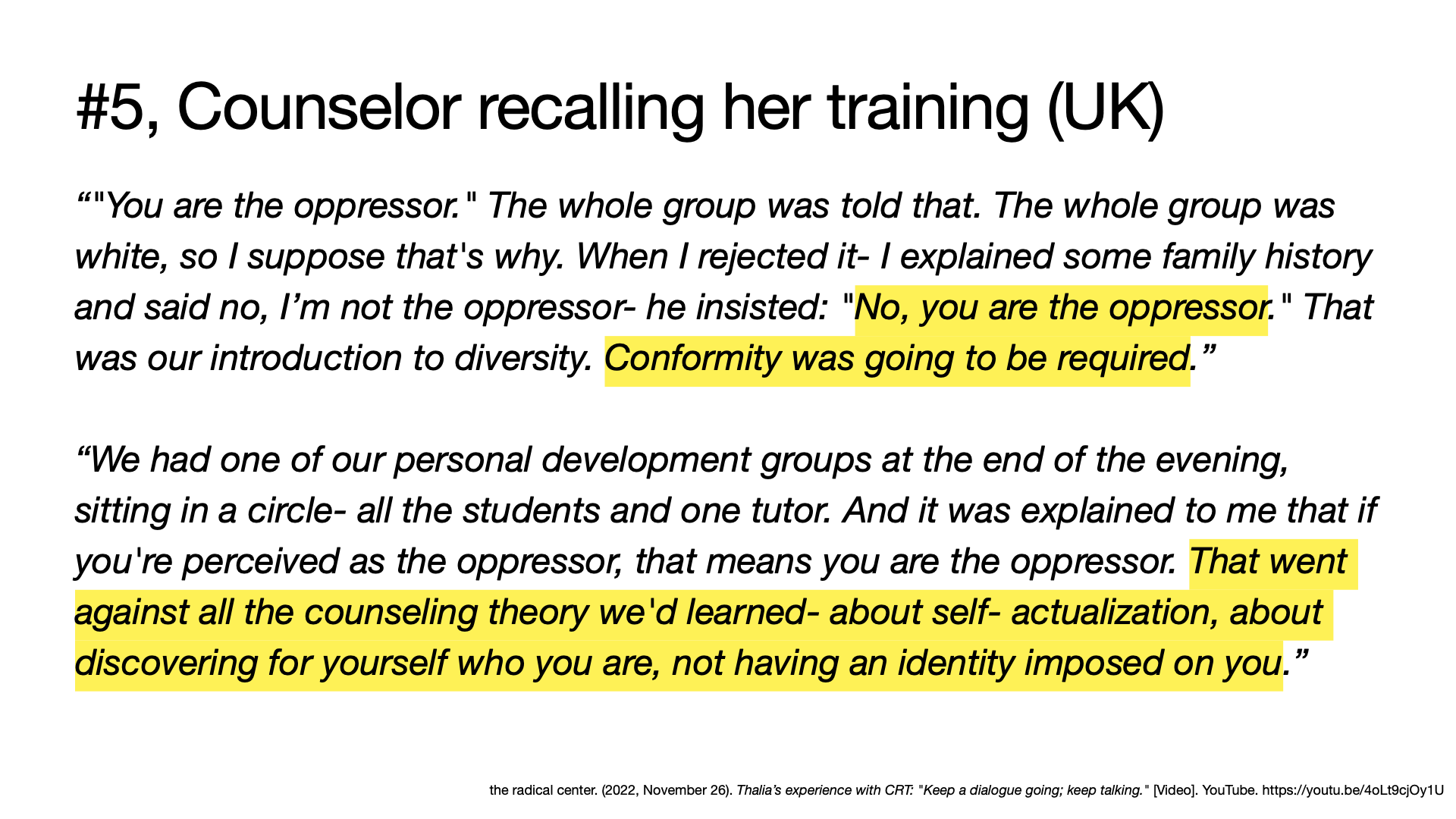
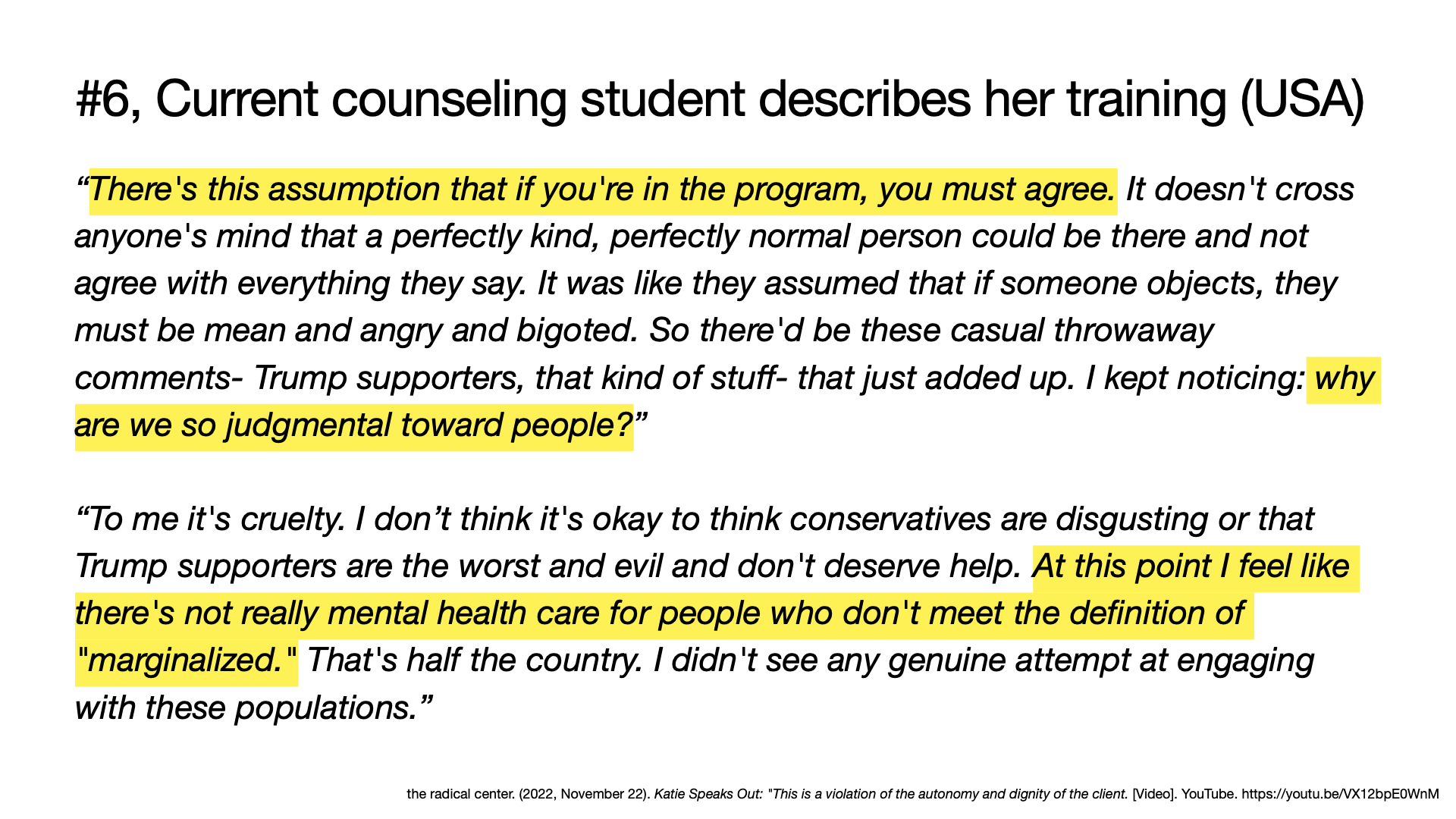
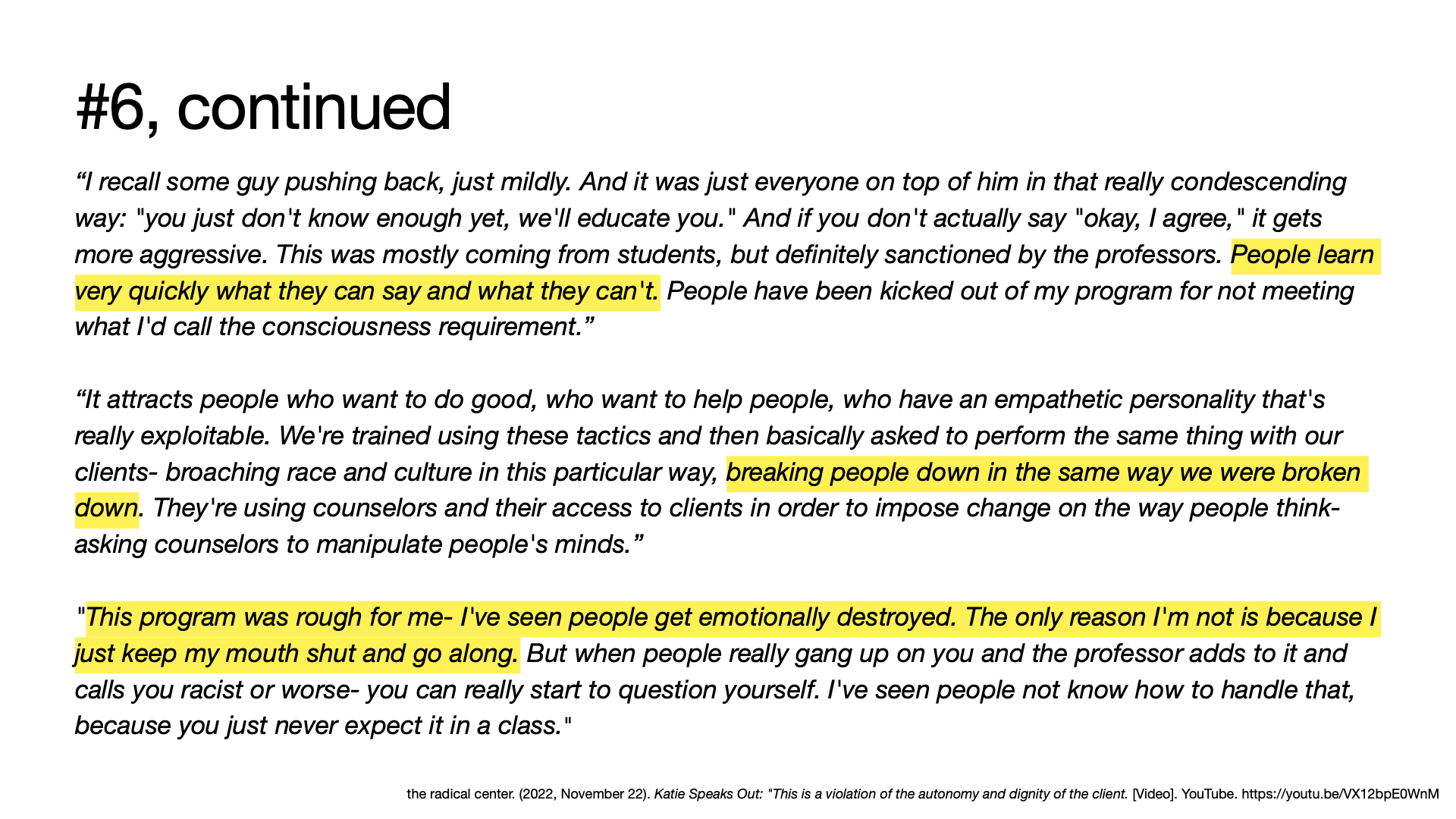
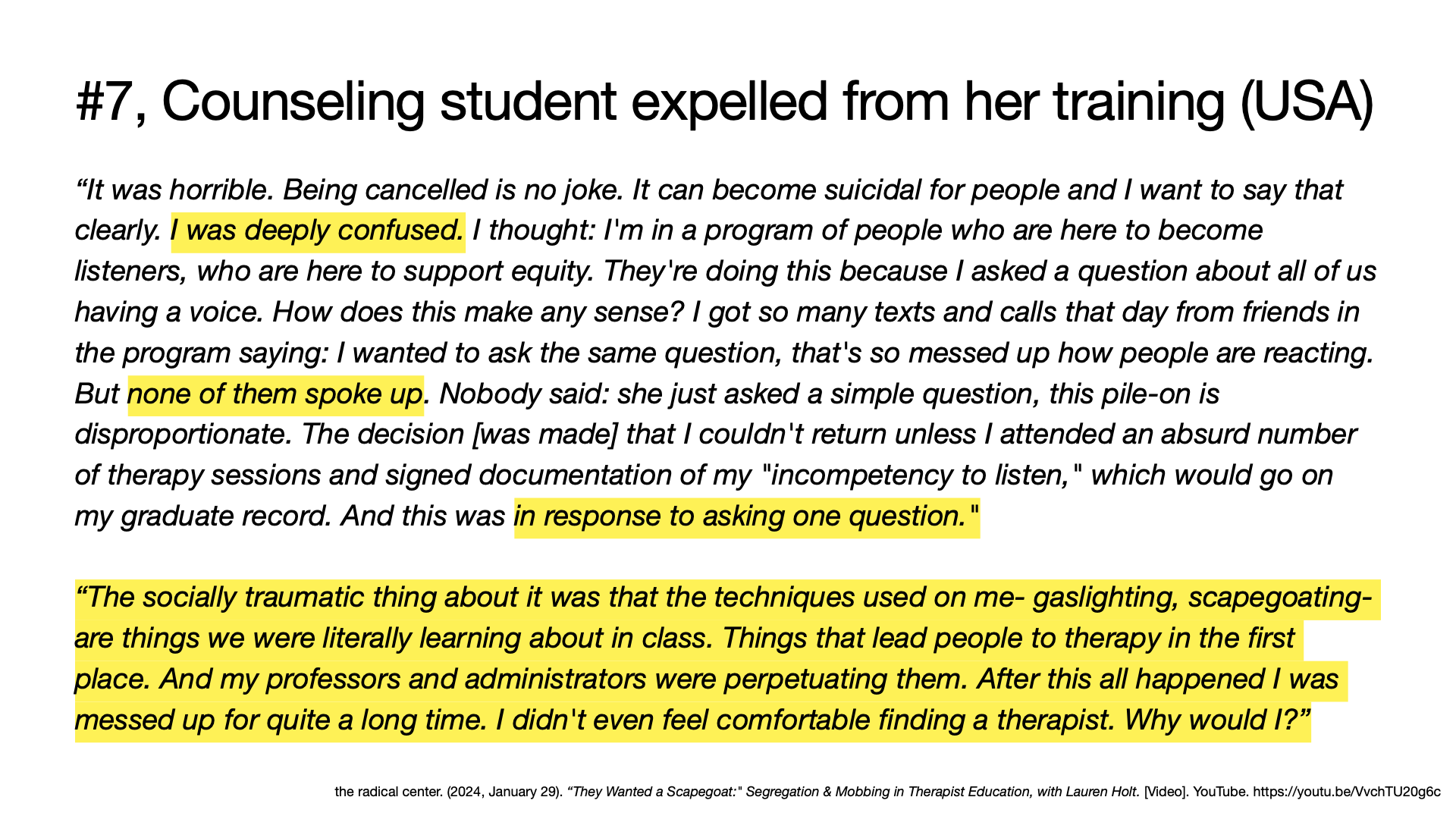
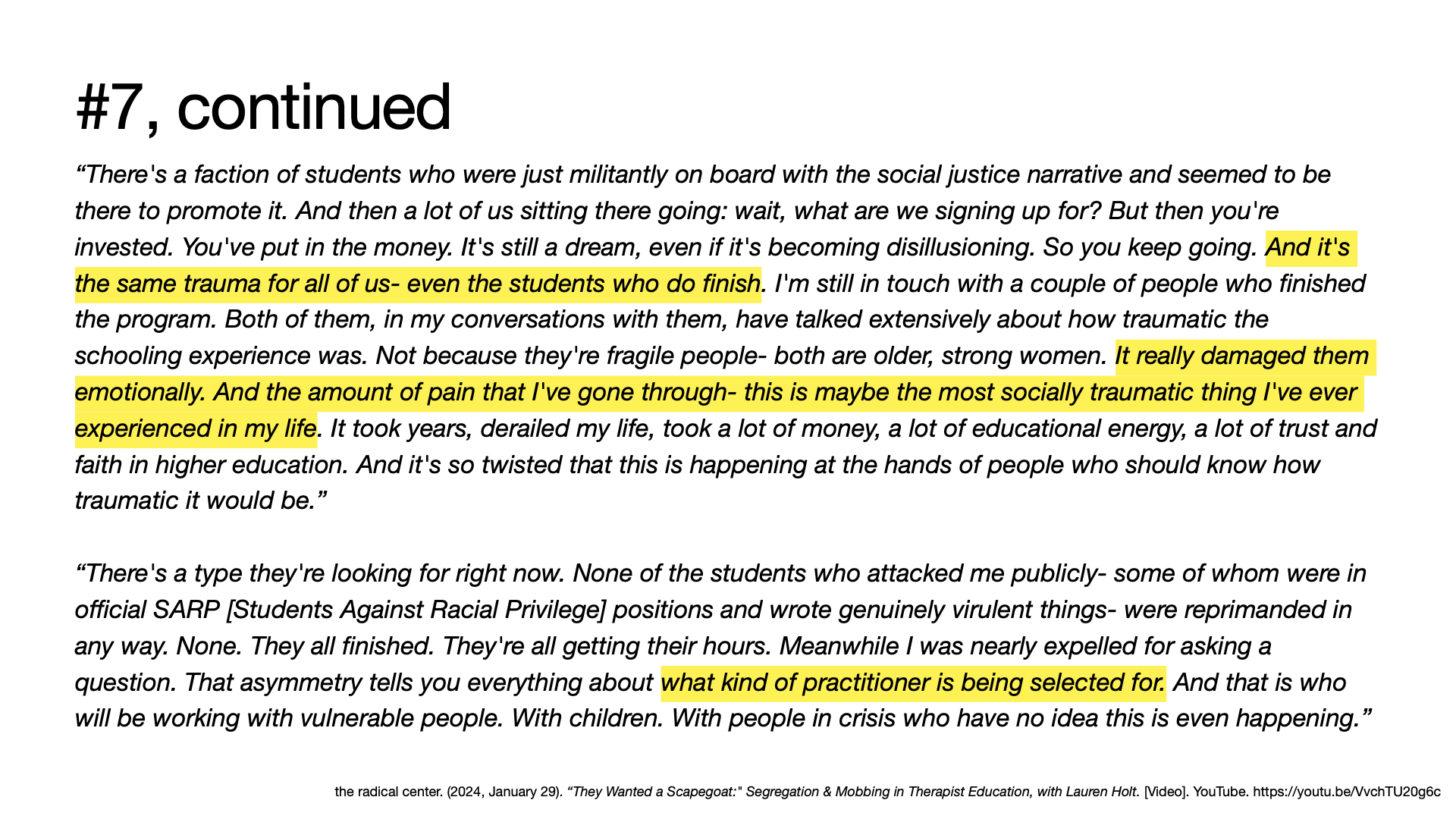
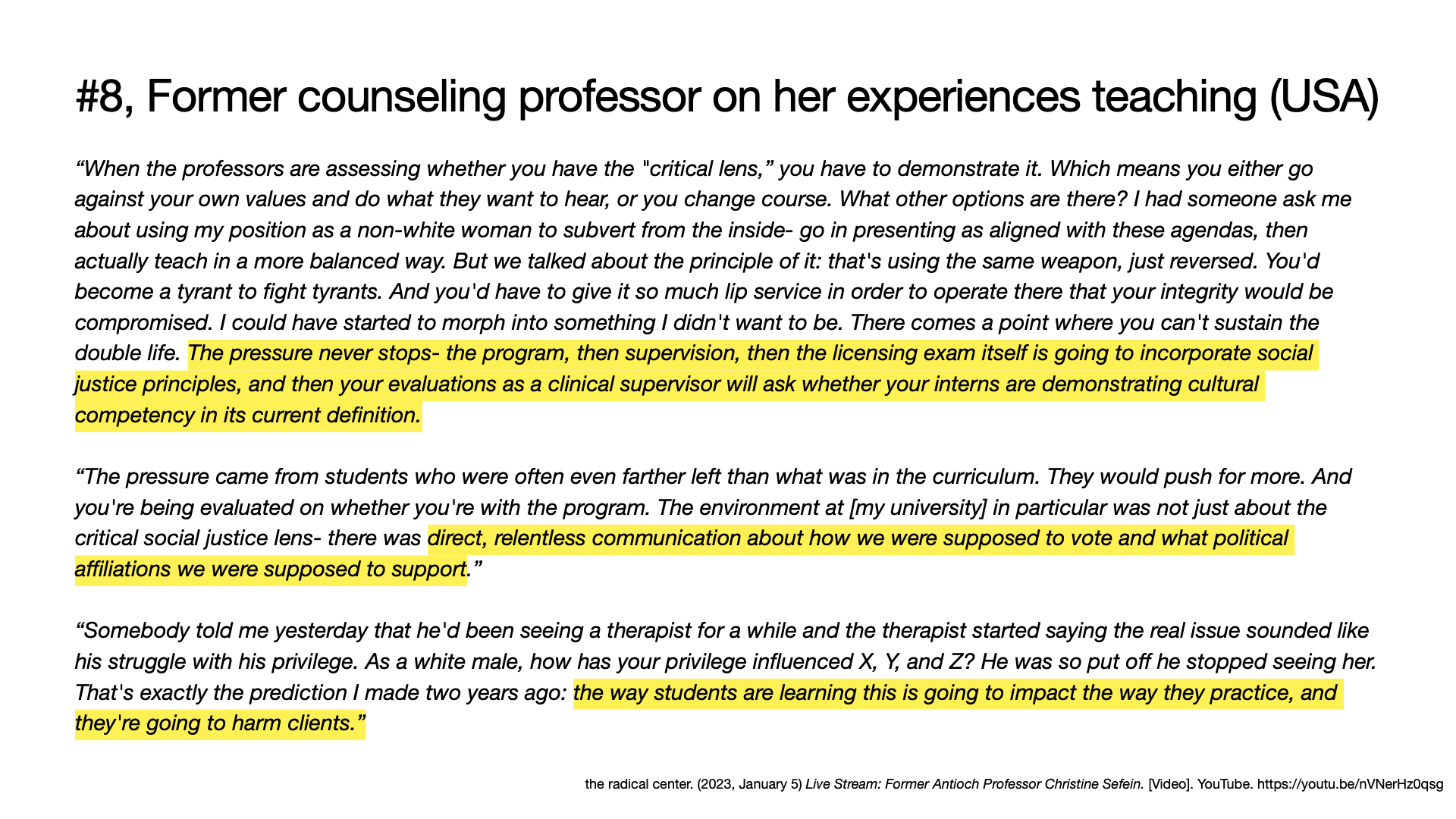
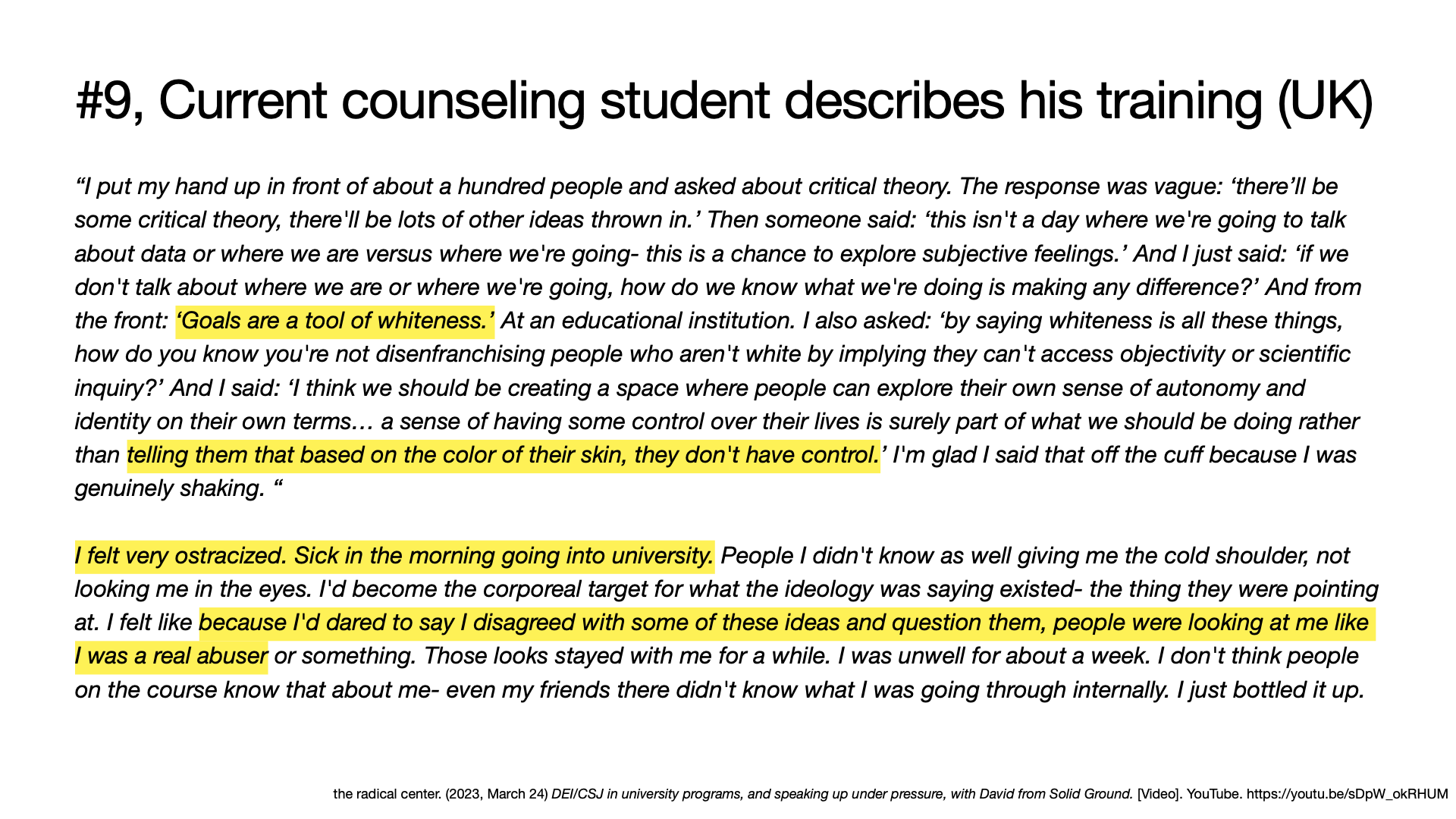
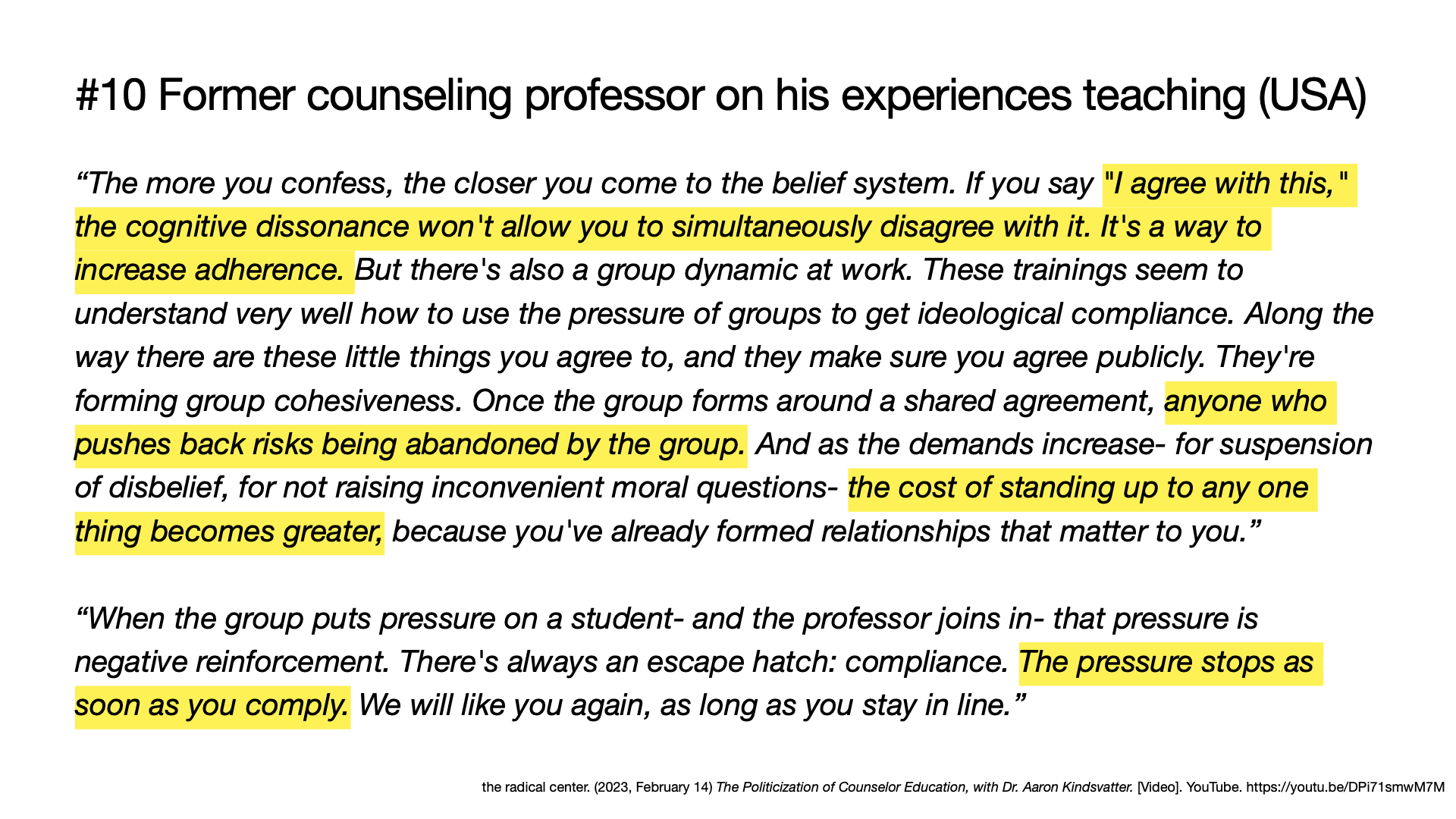
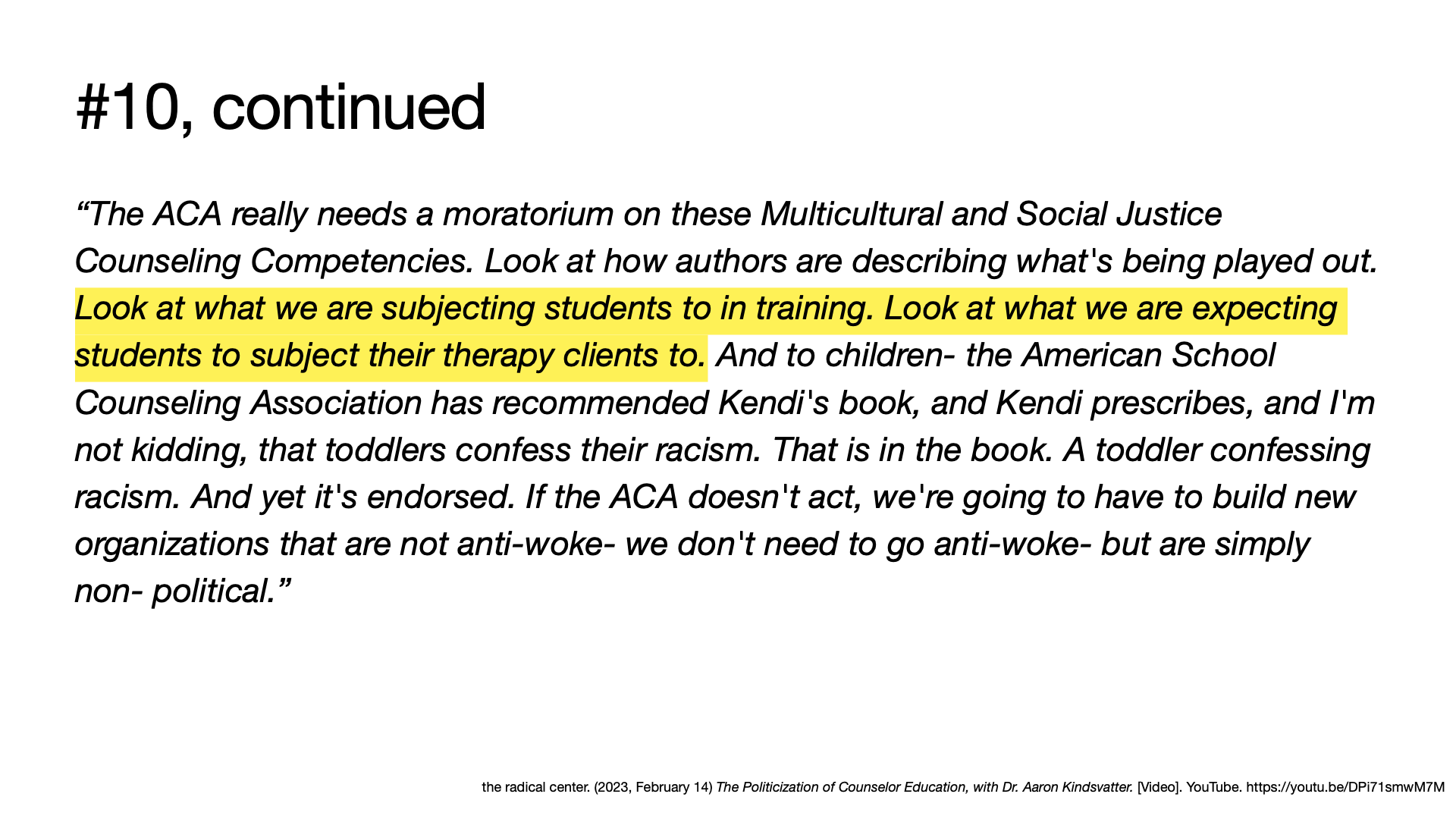
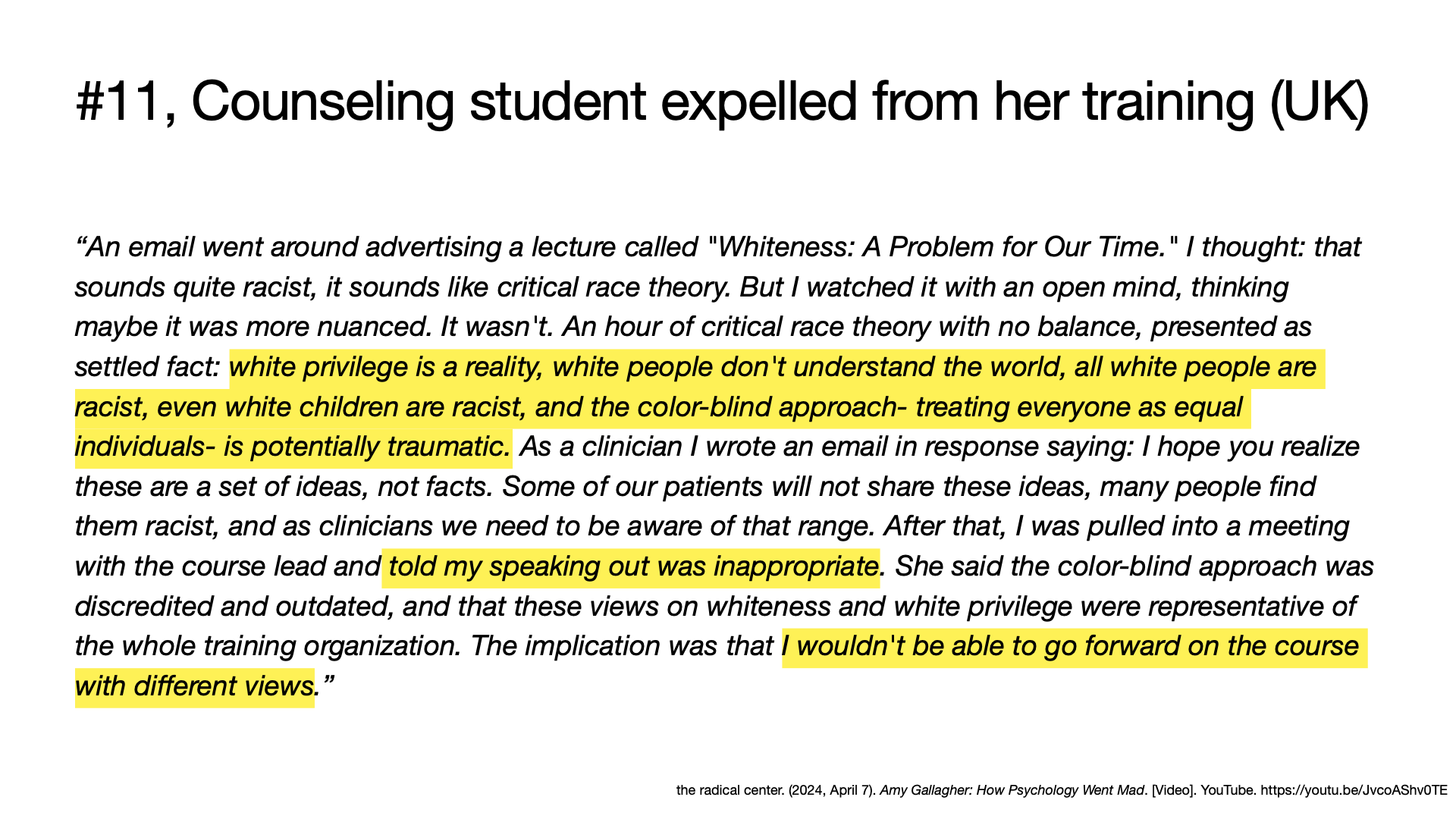
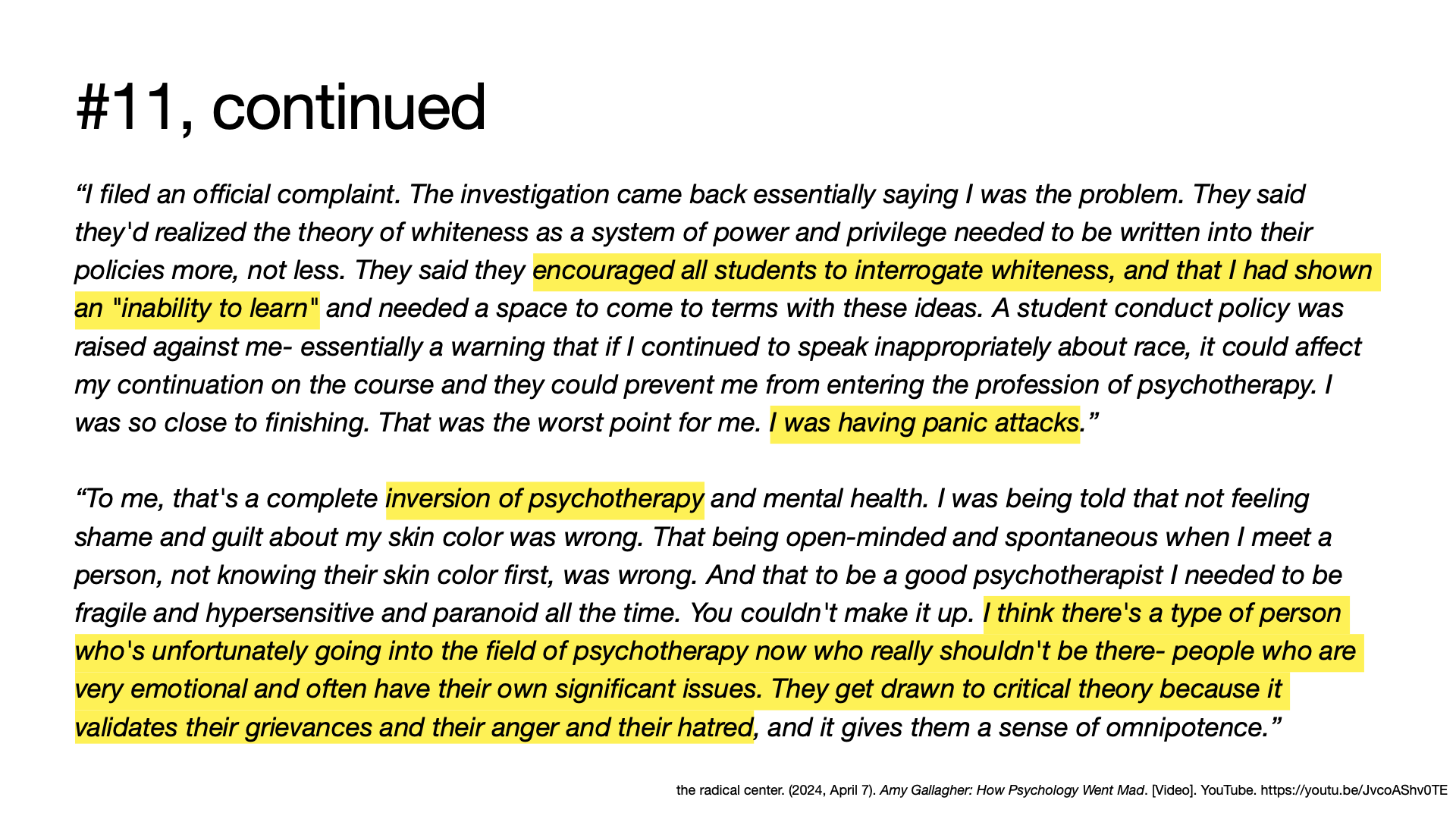
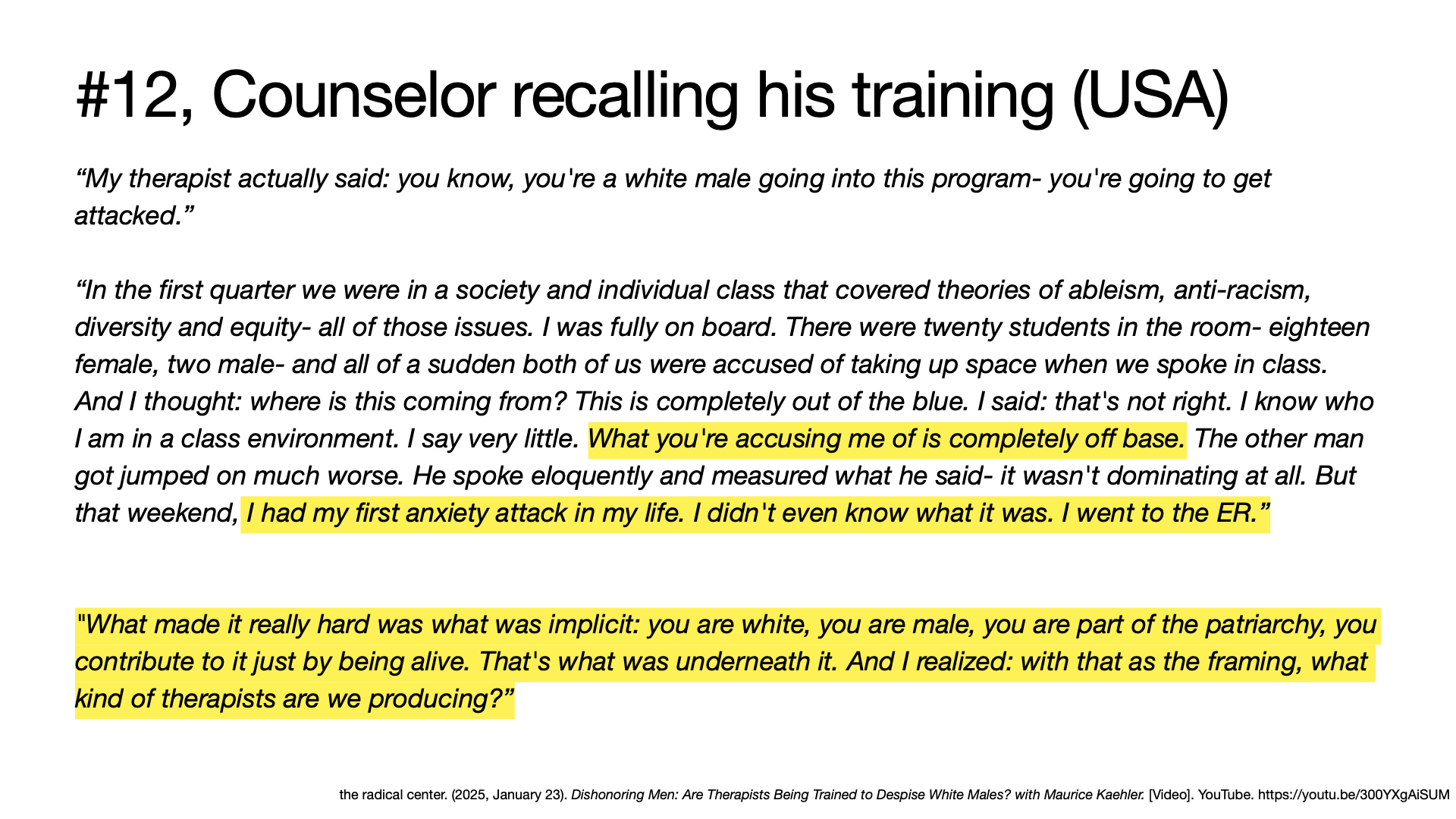
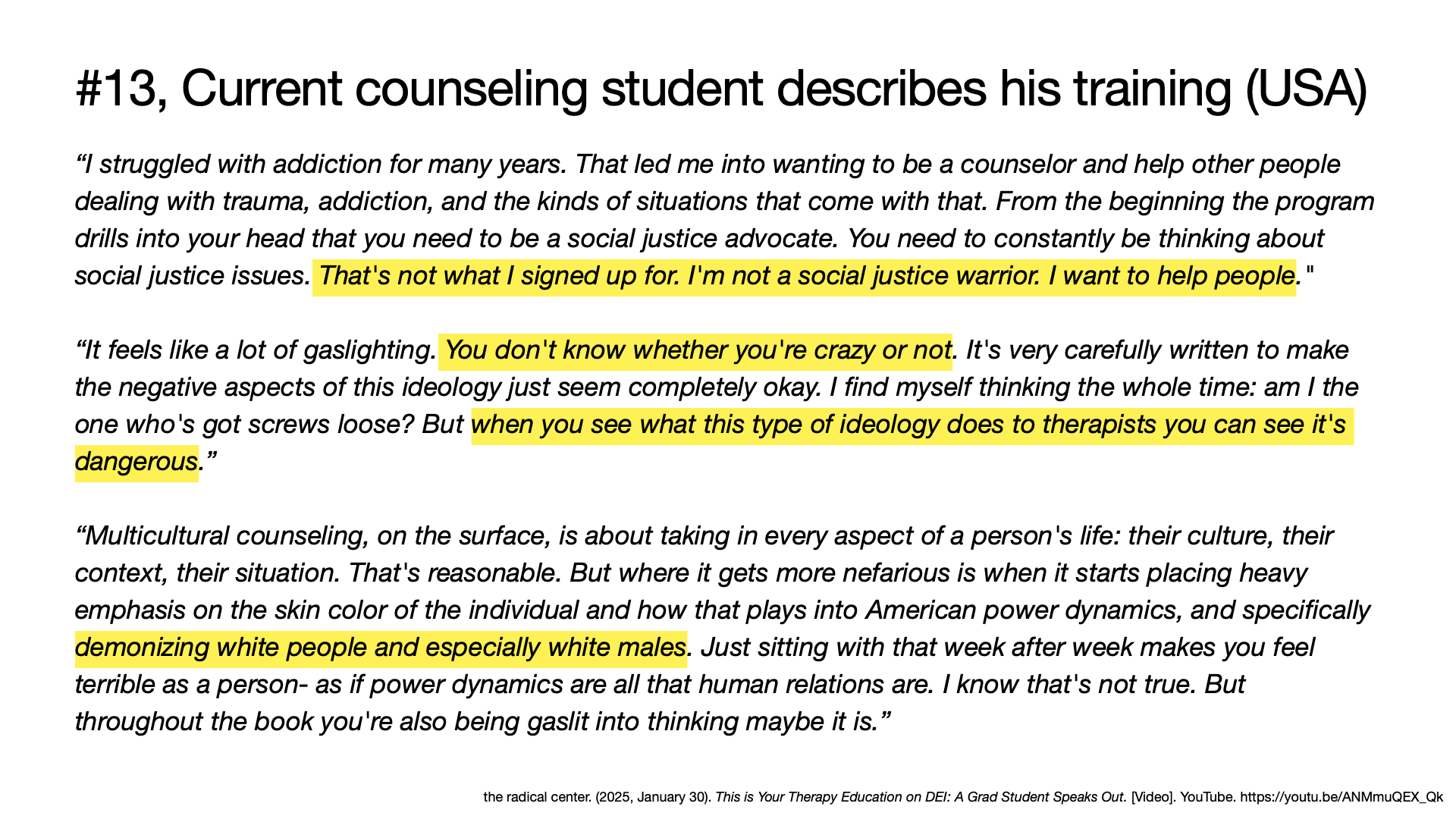
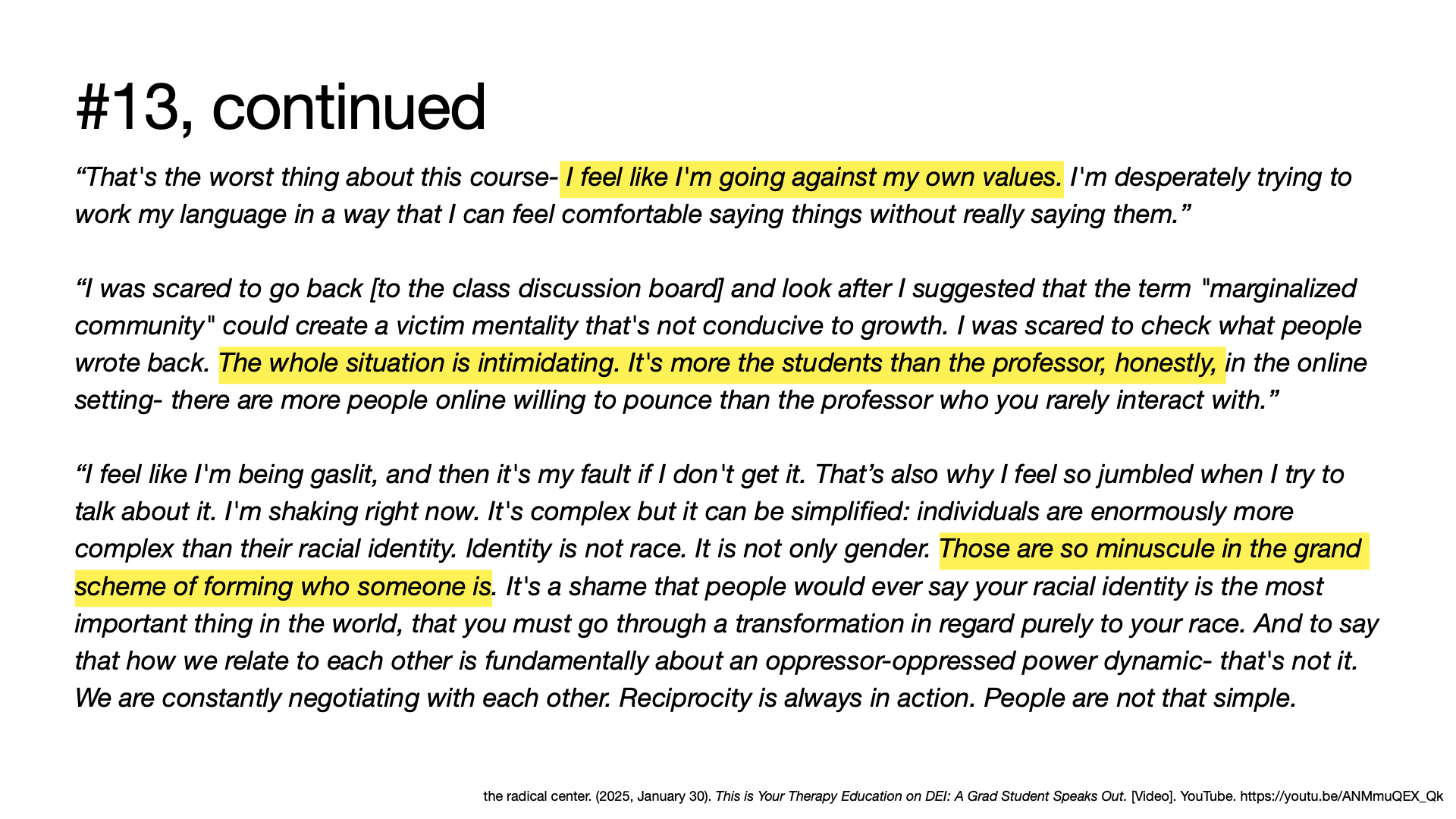
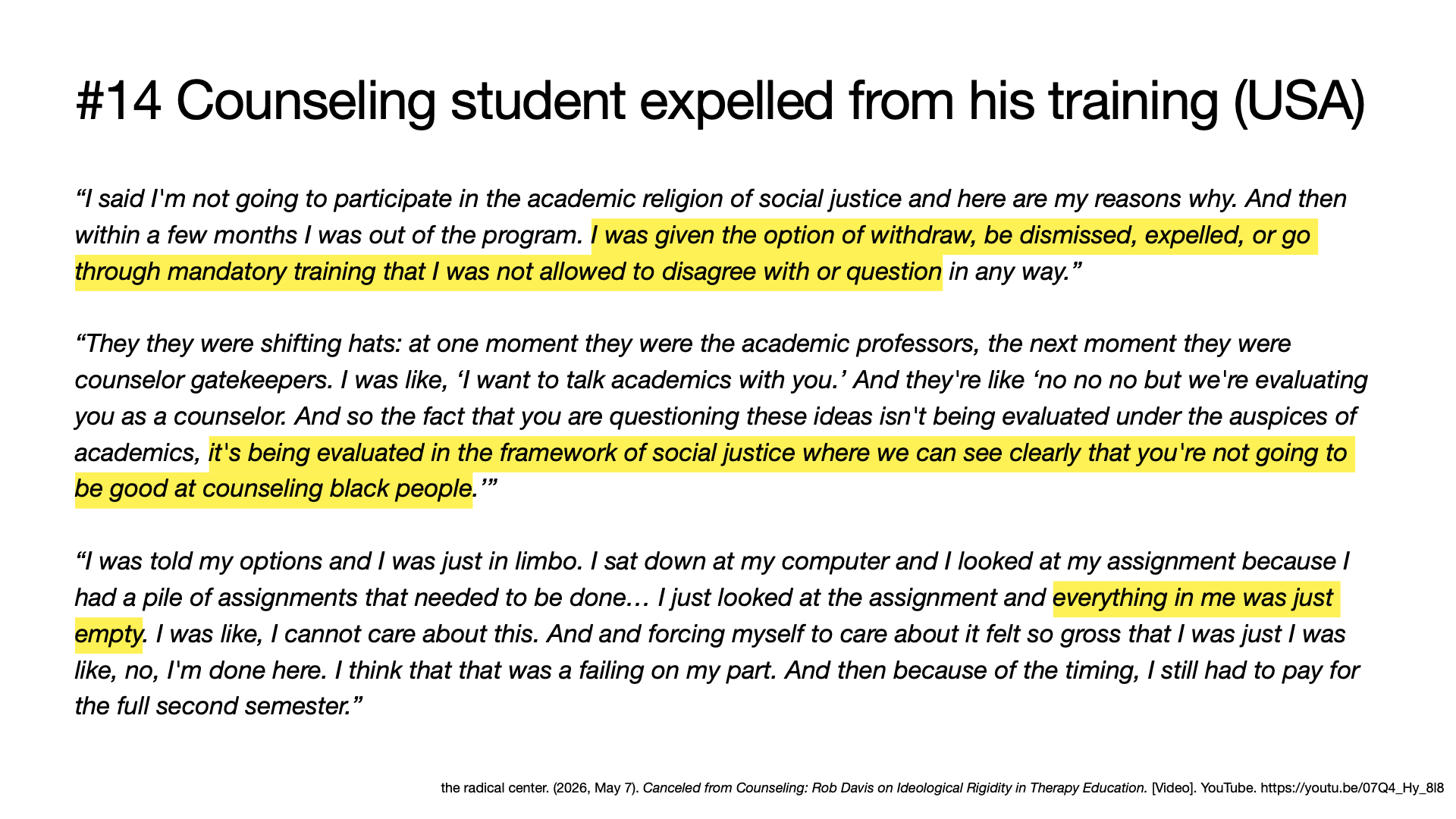
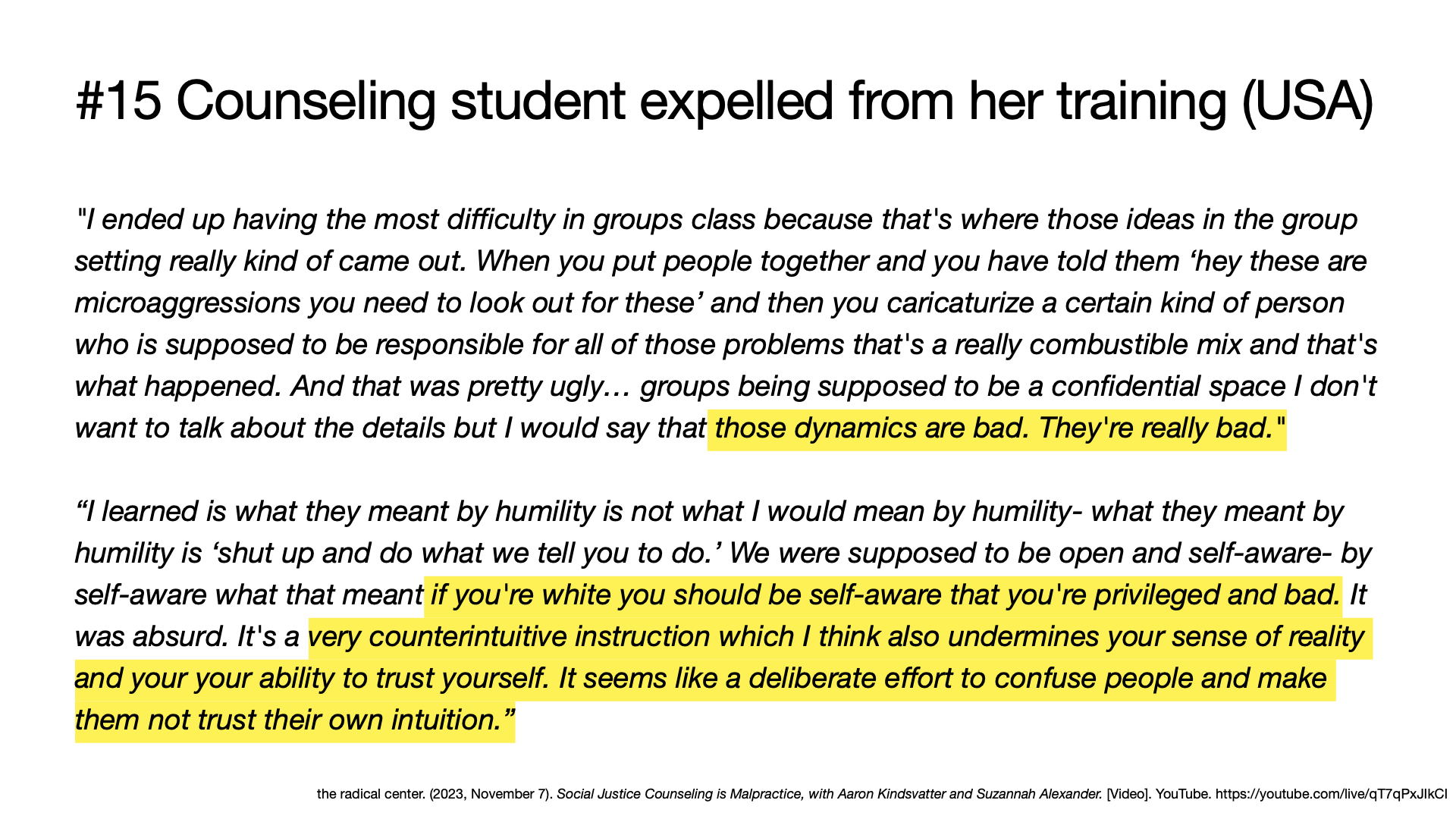
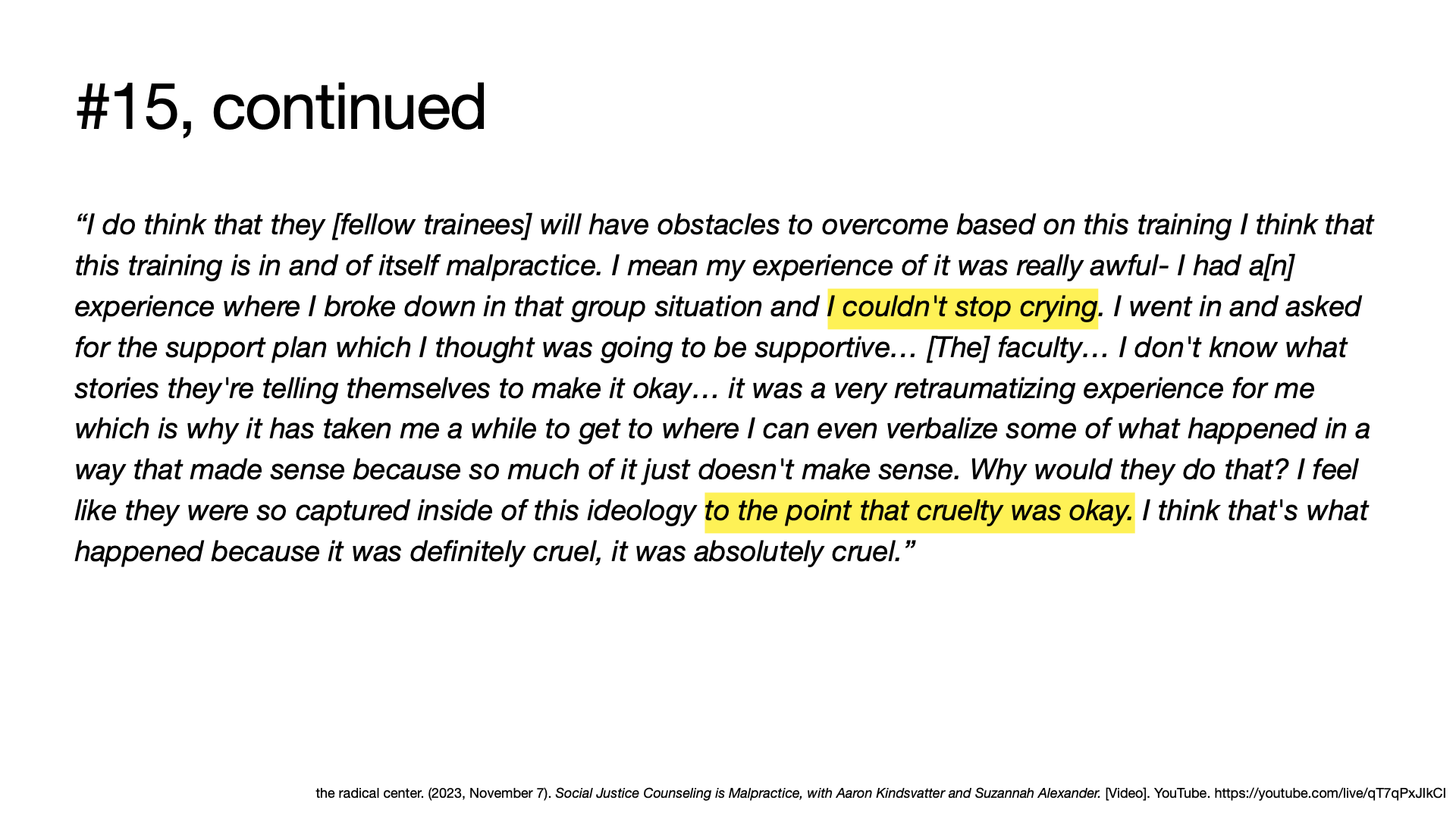
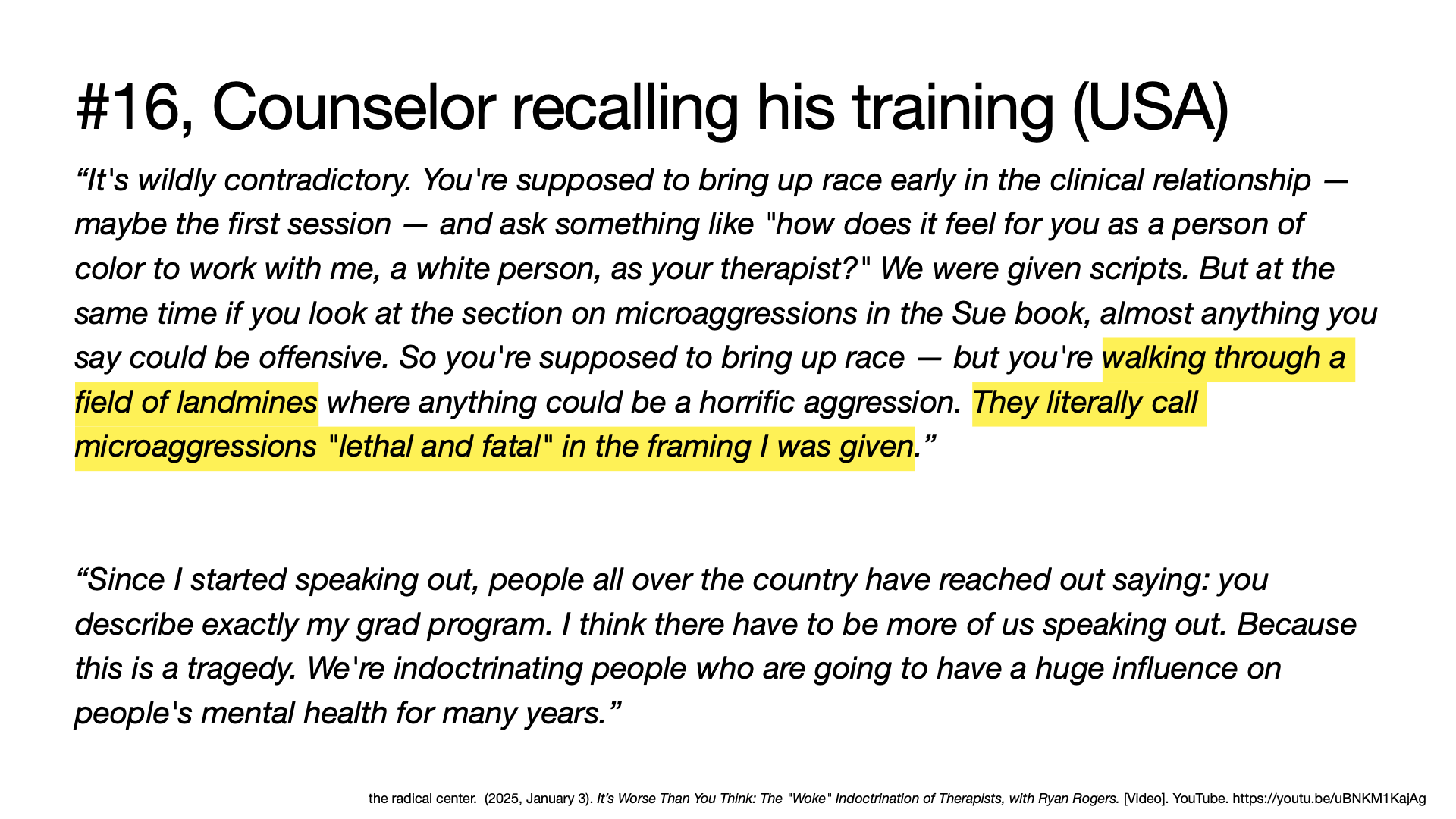
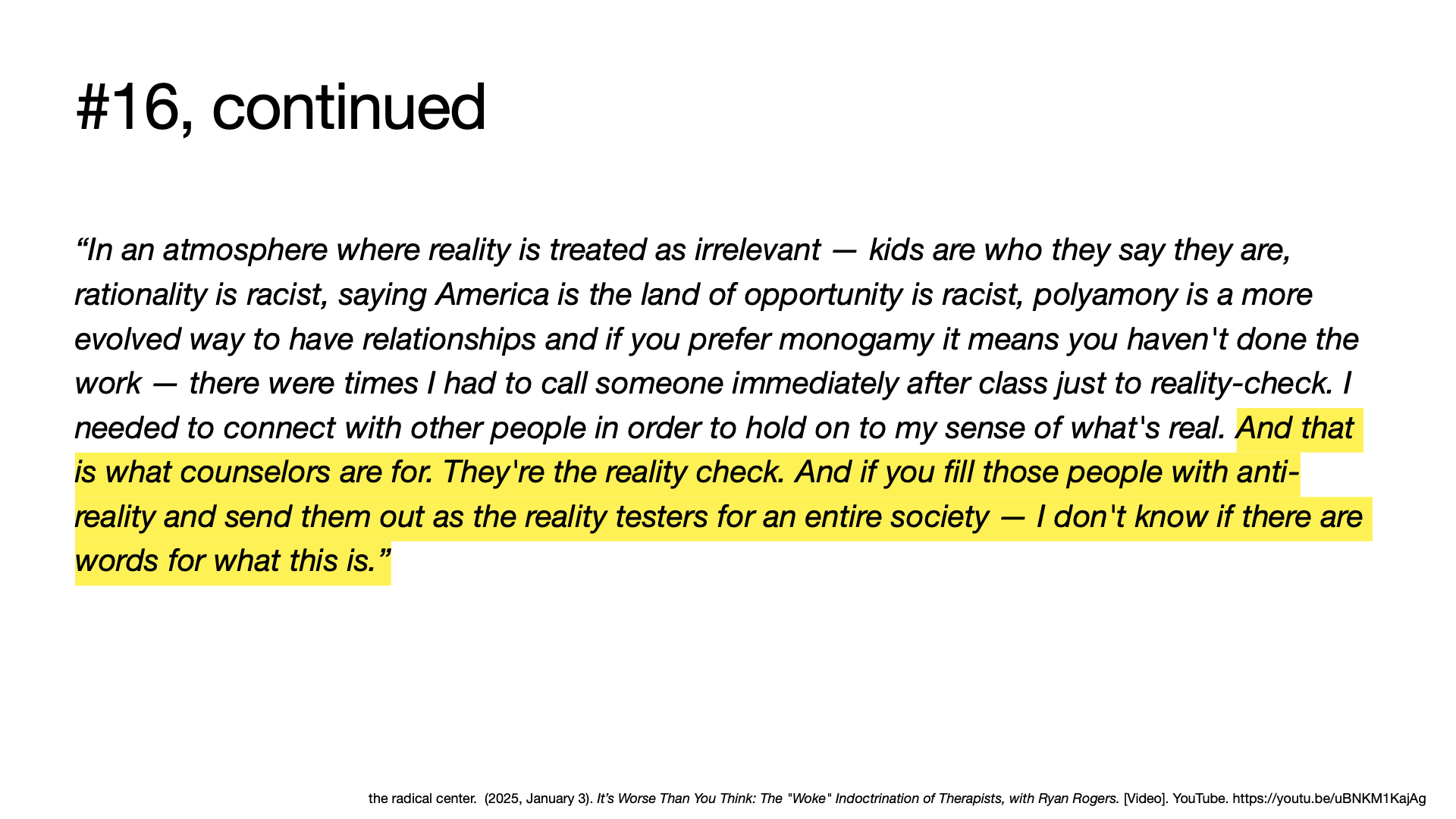
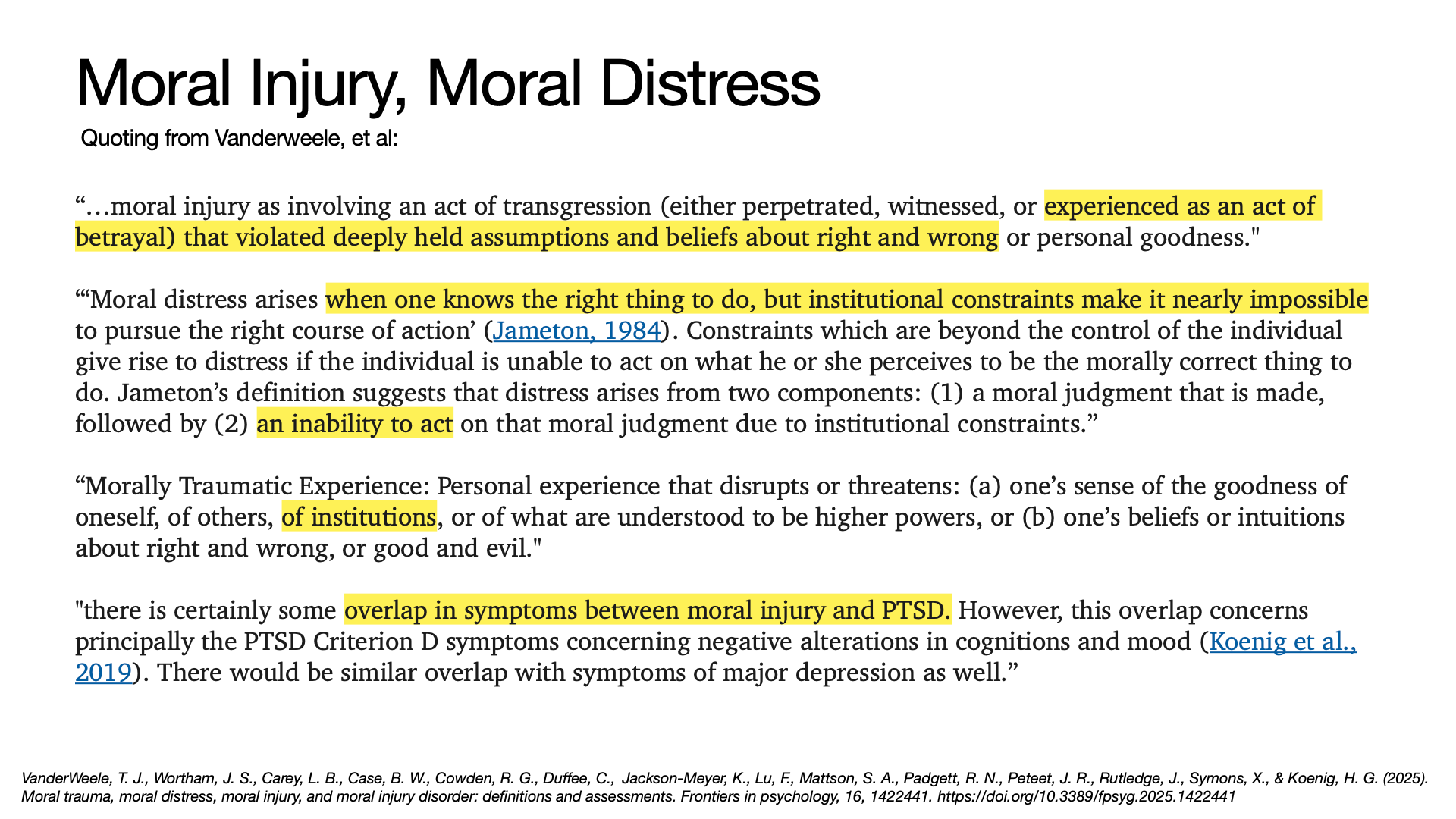
Contemporary counselor training and accrediting programs have taken the professional titles and the licenses to practice, and hollowed out the meaning of the work, replacing it with political and reductionist judgment. Some of the students best suited to work in the helping professions are being cast out or stifled by self-censorship, fear, and doubt during their trainings. The concept of moral injury helps to define the ways in which these trainees are being harmed. Instead of preparing counselors to provide excellent services to their clients, we are losing and alienating valuable and talented professionals, and producing a different kind of professional altogether. Ask yourselves, what effect does this have on people who are suffering and seeking help from counselors?
So, what’s in a name? A license? A professional identity? What does it mean to be a therapist, a clinician, a counselor? If the substance of the work and what is taught changes, is it still the same thing?

Rather than insisting that those called to help put themselves through this moral gauntlet, we could instead establish training opportunities grounded in principles that will allow them to cultivate and hone their helping skills. In the current regulatory environment, this means seasoned counselors may have to expand their acceptance of helpers outside the licensing and accrediting framework. If we can’t call them “counselors” because that word is regulated, we may have to choose new titles. A rose by any other name would smell as sweet.
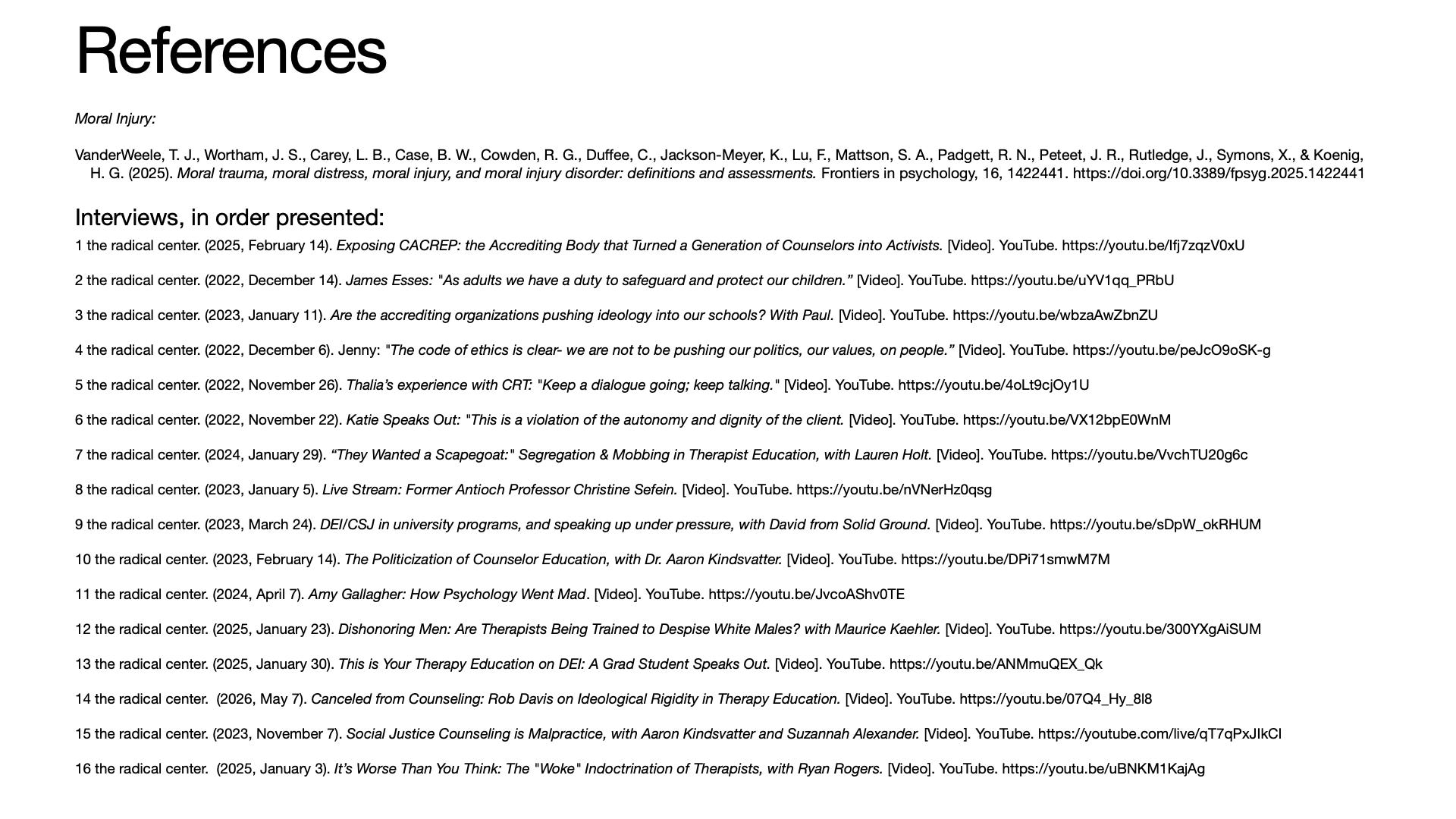
The stories I’ve shared here are just a drop in the bucket- it was incredibly difficult for me to pare this down, as I had so many more to share. If you are interested in hearing more from these individuals and others I’ve interviewed on the record, you can view them on my YouTube channel or podcast, but for every trainee who has shared their experience with me there are many, many others who are speaking in other places or suffering in silence. Real harm is being done to some of the most caring, sensitive, and open among us. It’s time to take this seriously, and if the institutions won’t change, we must create something better ourselves.
This is absolutely horrifying. You’ve documented the problem well, and I can only hope that your profession takes its dedication to patient care seriously enough to see the harm that this kind of activism will ultimately do to patients already feeling vulnerable. I hope you are listened to.
My experience with National University was almost identical to this. They tried twice to force me out of the program, but as a disabled combat vet, I was able to lawyer up and terrify them with the prospect of a civil rights lawsuit.
You must use their own tactics against them because they are stupid and thoughtless people.